
 Español
  English


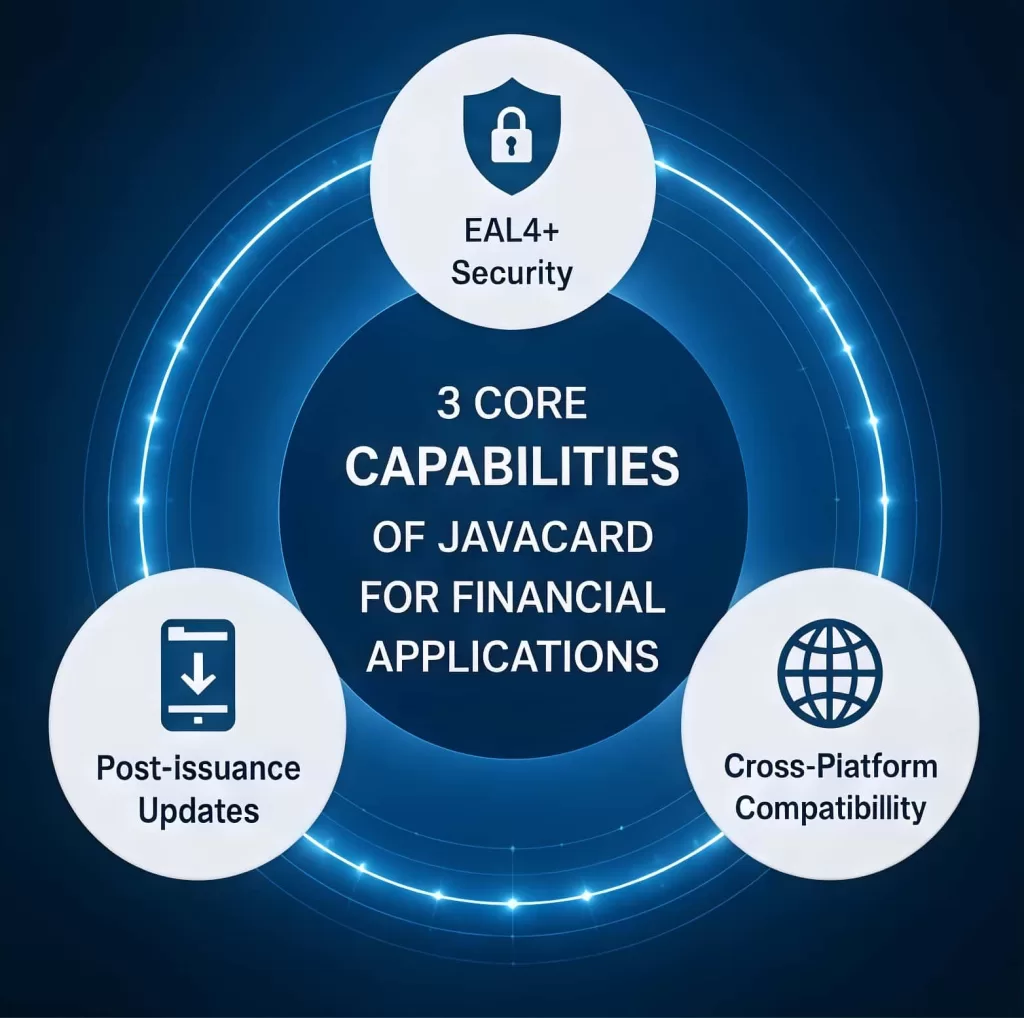
For Java Cards used in financial applications, this serves as a secure platform, a service delivery tool, and often the first physical point of contact between customers and banks. It provides card issuers with a way to build secure, flexible, and long-term card programs without sacrificing control. Many financial applications expect their card platforms to offer capabilities beyond payment transactions. They expect Java Cards to handle membership services, limited-time offers, secure authentication, and future applications not yet defined at the time of card issuance. The three core capabilities of Java Cards for financial applications include:
- EAL4+ Certified Protection
- Post-Issuance App Updates
- Cross-Platform Compatibility
It provides issuers with a platform that is both secure and flexible—exactly what modern financial applications require.
Java Card for Financial Applications Must Support Multiple Business Objectives
While Java Card for financial applications is currently used primarily for payments, issuers may wish to add features such as loyalty points, transportation, or secure access in the future. If the card platform cannot support this growth, issuers would have to reissue cards or redesign the entire system. This is both costly and disruptive to business operations. Java Card avoids such issues by making cards programmable and easy to manage.
When we speak with financial clients, we explain the practical benefits this brings to their businesses. In financial applications, these include EAL4+ certified security protection, post-issuance application updates, and cross-platform compatibility—write once, run anywhere. It is precisely these features that enable Java Card to play a vital role in real-world card projects.
EAL4+ Certified Security for Java Card for Financial Applications
The primary feature of Java Card for financial applications is its EAL4+ security certification. In financial applications, Java Card must protect cryptographic keys, transaction data, and application logic from tampering, side-channel attacks, and unauthorized access. Therefore, security is just as important as functionality.
A Java Card platform designed specifically for financial applications must operate within a secure execution environment. Sensitive data must always be stored within the chip, accessible only to authorized applications, and never exposed to attackers. It is precisely this feature that assures financial institutions that the card is trustworthy in real-world applications.
The Practical Significance of EAL4+
EAL4+ certification demonstrates to buyers that the platform has been evaluated against a recognized security framework and is suitable for high-reliability smart card deployments. For financial projects, this is more than just a technical label; it is proof that security was thoroughly considered during the platform’s design and evaluation processes. In practice, EAL4+ helps demonstrate that the card can keep sensitive keys within secure boundaries, protect transaction information, and support financial operations without compromising internal confidentiality. This is precisely the assurance banks and card issuers require when selecting secure payment or authentication service platforms.

Post-Issuance Application Updates
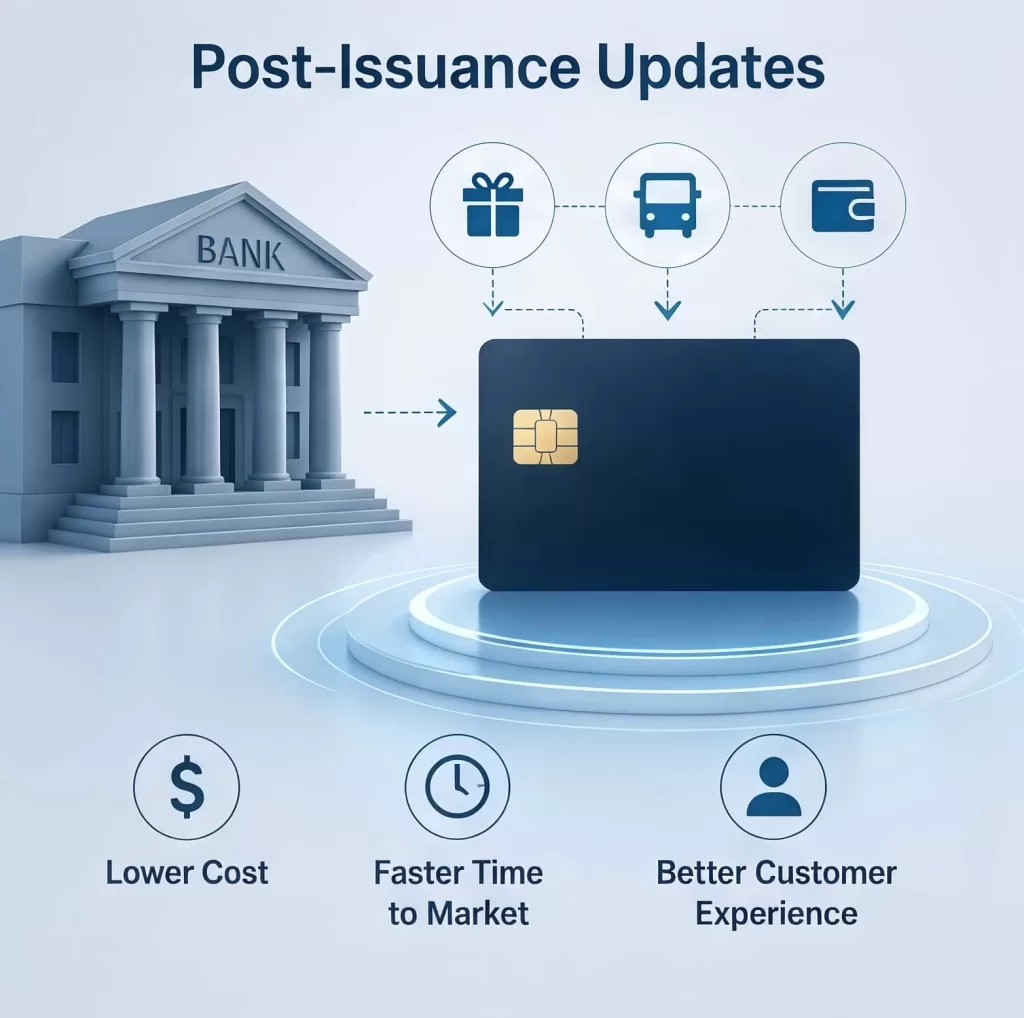
The second core feature is post-issuance application updates. This is one of the key reasons why Java Card remains so valuable in the financial sector. It allows new applications to be loaded or updated after the card has been issued to the customer. In the financial sector, this means banks do not need to recall old cards every time they launch a new service; instead, they can securely update the platform and expand the card’s functionality over time.
Why Do Post-Issuance Updates Transform Business Models?
Financial products are constantly evolving. Banks may need to introduce temporary credit limit adjustments, coupon campaigns, new loyalty program features, or support mini-programs for new customer segments. If Java Card is used for financial applications that support post-issuance updates, these changes can be implemented without replacing the cards. This reduces costs, shortens time-to-market, and makes projects more flexible. At the same time, since users do not need to replace their bank cards, banks can add new services behind the scenes, thereby enhancing the customer experience.
Cross-Platform Compatibility for Java Card for Financial Applications
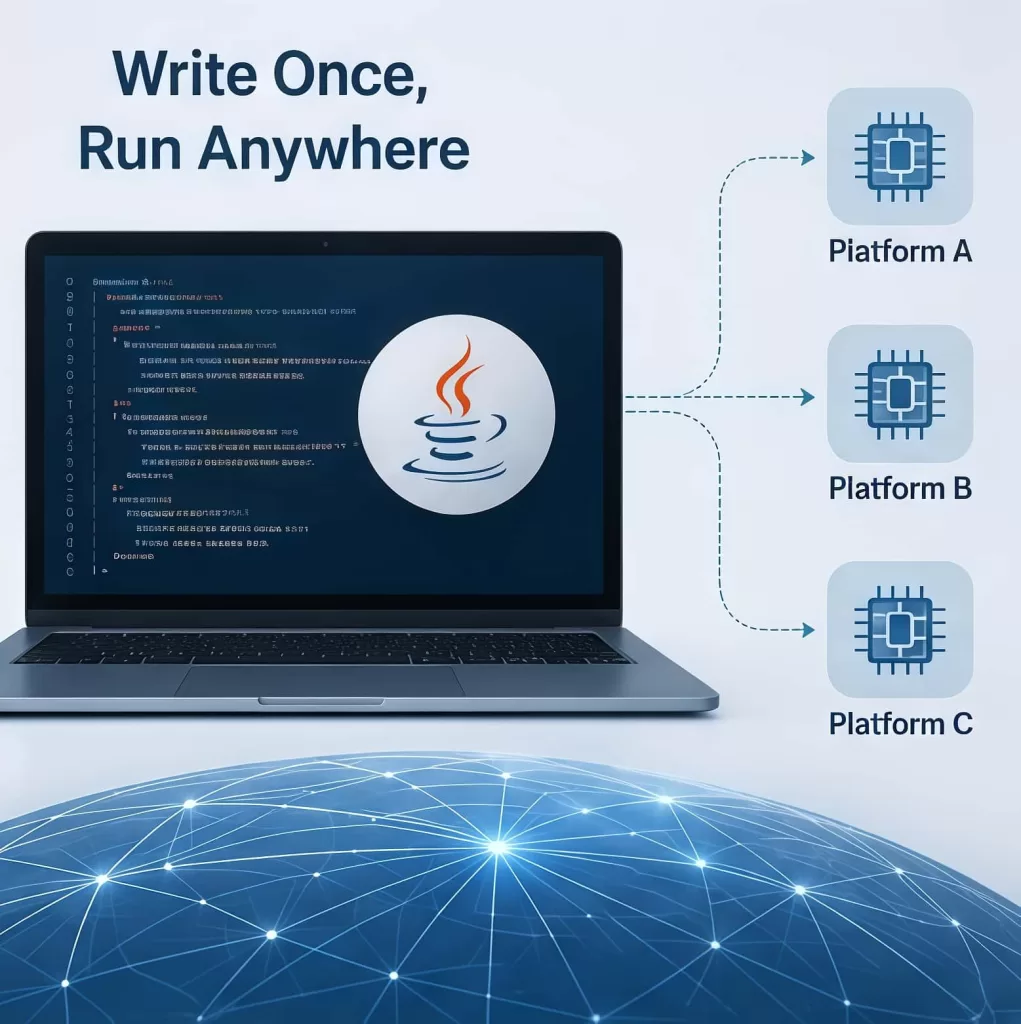
The third core feature is cross-platform compatibility, embodied by the “write once, run anywhere” principle. This portability has long been a key advantage of Java, and Java Card extends it to the secure card environment. For Java Cards used in financial applications, this capability reduces development and maintenance costs. A Java Card application developed for one certification platform typically requires only minor modifications to be deployed on another. This provides greater flexibility for card issuers and solution providers.
Making Compatibility a Key Cost Advantage
In financial card projects, development costs extend beyond coding to include testing, certification support, maintenance, and long-term updates. If an application relies heavily on a single vendor’s implementation, the cost of future changes will rise rapidly. Java Card’s portability helps alleviate this burden. It makes it easier to reuse the application layer across compatible platforms, thereby reducing development overhead and simplifying future maintenance.
Providing a Security Foundation for Financial Applications
The three core features that Java Card offers for financial applications are clear, straightforward, and highly practical. EAL4+ certified security protection provides a robust security foundation for cards, defending against tampering and side-channel attacks through hardware-level defenses. Second, the post-issuance application update feature allows financial institutions to add or modify services after cards have been issued, thereby increasing flexibility and reducing reissuance costs. Third, the “write once, run anywhere” portability enables applications to run on different certified platforms with only minor modifications, thereby reducing development and maintenance workloads. These three fundamental capabilities provide a secure foundation for Java Card in financial applications.