
 English
  Español

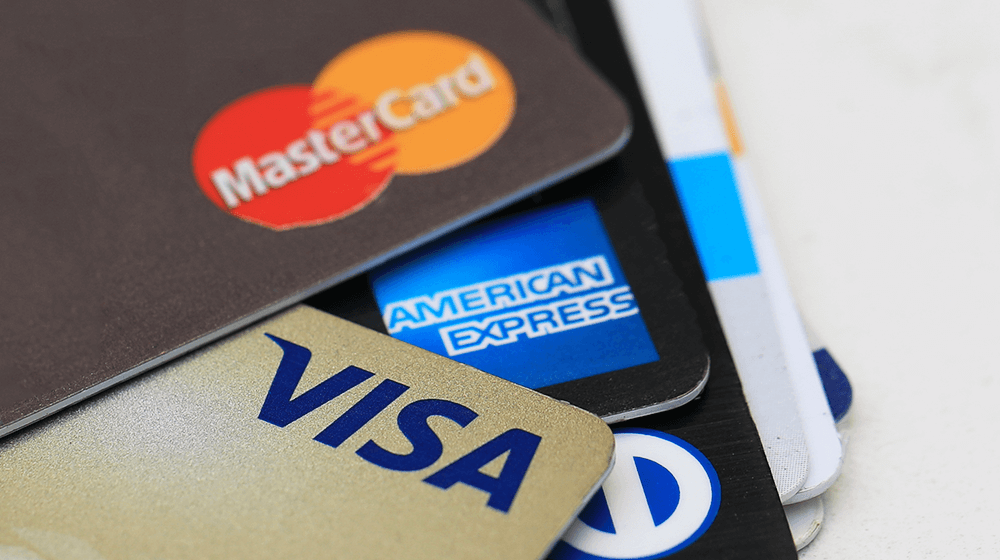
Choosing the right card material is a fundamental decision when designing business prepaid cards. Materials determine the card’s durability, print quality, personalization options, environmental performance, and compatibility with security chips (such as the TMC THC20 SIM Java card). Simply put, material selection impacts user experience, card lifespan, and total cost of ownership. Therefore, as a smart card manufacturer, we’ll guide you through the four most commonly used materials—PVC, PET-G, PET, and PC—and explain their practical advantages and disadvantages to help you choose the right substrate for your business applications.
Material Selection for Business Prepaid Card Manufacturing
Choosing the right material is fundamental to any business prepaid card project. The substrate choice determines the card’s durability, chip compatibility, personalization quality, mechanical strength, and overall lifecycle cost. Whether integrating security modules like the TMC THC20 SIM Java card or prioritizing sustainability goals, material selection directly impacts the card’s long-term performance and user satisfaction.
In the professional smart card manufacturing field, we emphasize a simple yet crucial principle: “Materials determine reliability, even before technology development.” A business prepaid card used for daily expense management must withstand bending, high temperatures, and repeated insertions and removals. In contrast, a short-term promotional prepaid card may prioritize cost-effectiveness over years of durability. Beyond structural performance, materials also affect lamination stability, print adhesion, edge seal integrity, and resistance to environmental factors such as humidity and UV radiation. Therefore, it’s essential to assess not only initial production costs but also anticipated field performance and replacement frequency.
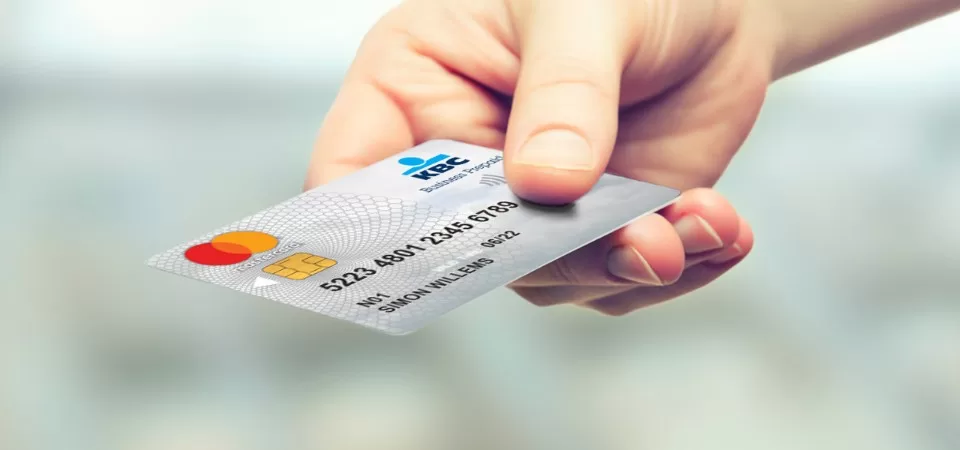
Application of PVC in Business Prepaid Card Production
PVC remains the most commonly used substrate for business prepaid cards due to its affordability and processing flexibility. Its long history in card manufacturing means that most personalization and lamination equipment is optimized for PVC, reducing setup complexity and minimizing production risks.
Advantages of PVC in Business Prepaid Cards
PVC offers excellent thermal sublimation properties, enabling high-resolution images and vibrant corporate branding. It supports hot stamping, embossing, magnetic stripe integration, and holographic lamination with minimal adjustments. The material’s flexibility also reduces the likelihood of cracking under moderate bending stress, making it highly practical for everyday wallet storage. Furthermore, PVC’s cost-effectiveness makes it ideal for large-scale issuance projects. PVC achieves a sensible balance between appearance and price, where cost control is crucial.

Limitations of PVC in Smart Card Applications
Despite its many advantages, PVC has lower heat resistance compared to PET or PC. During chip embedding, especially when integrating TMC THC20 SIM Java cards, lamination temperatures must be precisely controlled to prevent warping or internal stress. Additionally, PVC may exhibit edge wear and surface scratches after a period of use.
Applications of PET-G in Business Prepaid Card Manufacturing
PET-G achieves a balance between cost-effectiveness and durability. For many rechargeable business prepaid cards, it is a more practical upgrade option than PVC and costs significantly less than PC.
Key Advantages of PET-G
Compared to PVC, PET-G offers higher impact resistance and dimensional stability. It performs reliably under moderate temperature variations and can withstand repeated bending without cracking. From a printing perspective, PET-G supports thermal sublimation and heat transfer printing, offering excellent clarity and color retention.
Furthermore, PET-G aligns better with sustainability initiatives. Many regions offer recycling pathways for PET-based materials, enabling businesses to demonstrate their environmental responsibility in prepaid card projects. When embedding TMC THC20 SIM Java cards, PET-G’s enhanced heat resistance improves lamination consistency. This helps achieve more stable antenna positioning in contactless configurations and reduces long-term performance drift.
PET Offers Greater Structural Stability and Sustainability
PET’s higher rigidity and heat resistance make it suitable for long-life business prepaid cards used in harsh environments. It is commonly used in transportation cards and rechargeable systems where reliability is paramount.
Advantages of PET
PET maintains structural integrity even at higher lamination temperatures, ensuring a secure embedding of TMC THC20 SIM Java cards. Its moisture and chemical resistance make it particularly suitable for environments with high humidity or frequent outdoor use. Additionally, PET exhibits excellent fatigue resistance. PET cards maintain flatness and dimensional accuracy even after thousands of insertion and removal cycles. This stability ensures consistent chip contact performance and reduces terminal reading errors over time. While PET may require surface treatments to optimize print adhesion, its long-term durability and recyclability make it ideal for organizations that balance technological reliability with environmental friendliness.
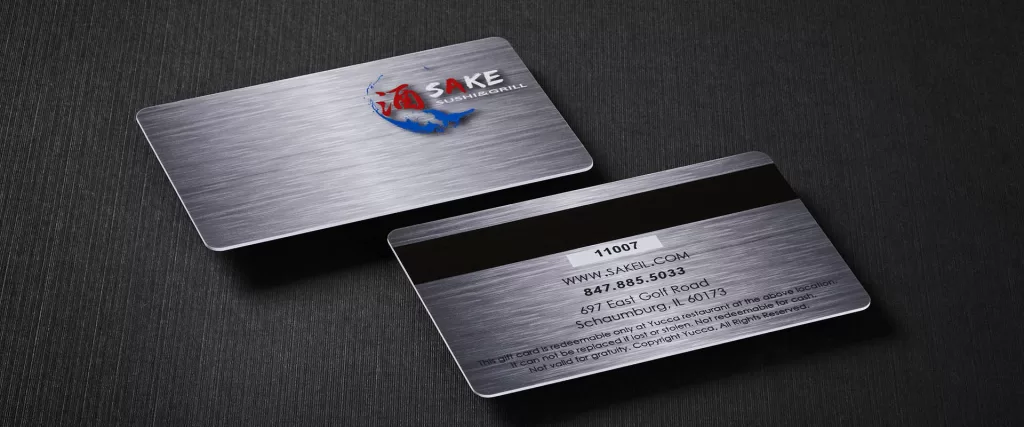
PC Material for High-End Business Prepaid Card Projects
Polycarbonate is the top choice among card substrates. For executive-level business prepaid cards, PC offers unparalleled mechanical strength and aesthetics.
Advantages of PC Material
PC offers superior abrasion resistance, thermal cycling resistance, and resistance to structural deformation. Unlike PVC or PET-G, PC supports deep laser engraving for permanent personalization with no visible damage upon removal. This is especially important for anti-counterfeiting and long-term authentication.
Furthermore, PC supports complex multi-layered structures, tactile elements, and transparent security windows. Its rigidity ensures that embedded modules remain firmly in place even after prolonged high-intensity use. While PC increases initial production costs, its durability reduces replacement frequency and enhances the perceived value of the card, making it more suitable for high-end corporate expense reimbursement programs.
Technology for Customized Corporate Prepaid Cards
Chip integration is a critical step in the production of business prepaid cards. Regardless of the material chosen, the embedding process must ensure stable electrical performance and long-term reliability.
For PVC and PET-G, we typically use traditional inlay lamination processes. PET exhibits higher dimensional stability during high-temperature processing, reducing the risk of antenna deformation. PC may require techniques such as cavity milling or laser welding to secure the module precisely.
The TMC THC20 SIM Java card has stringent requirements for the cavity depth of the contact interface, the degree of adhesive curing, and the reliable exposure of the electrode pads. If contactless functionality is involved, antenna tuning must be verified after lamination to ensure a consistent read range across multiple terminal types. By matching material properties to chip integration requirements, we are able to avoid mechanical stress concentration and ensure stable electrical performance throughout the card’s lifespan.
Optimal Material Selection
The best materials for business prepaid cards depend on a balance between durability, cost, security, sustainability, and compatibility with embedded technologies. PVC offers affordability and printing flexibility. PET-G combines durability and environmental friendliness. PET provides structural stability for long-term applications. PC ensures the maximum durability and superior security required for high-value applications.