
 English
  Español


In the global financial payments industry, the security level of a smart card chip directly determines whether it can be used for credit card transactions, cross-border payments, and high-security authentication. Modern payment systems no longer evaluate chips solely by storage capacity or communication speed; instead, they focus on whether the chip has passed internationally recognized security certifications, can withstand complex attacks, and complies with domestic and international financial standards. The TMC THD89 Java Card is a high-security Java smart card platform. The THD89 integrates advanced cryptographic architecture, financial-grade operating system security, and multi-standard payment compatibility.
More importantly, it has obtained multiple top-tier international and domestic certifications, fully demonstrating its suitability for financial IC cards, banking applications, and secure payment ecosystems.
SOGIS CC EAL6+: The Highest Security Level Certification for Commercial Smart Card Chips
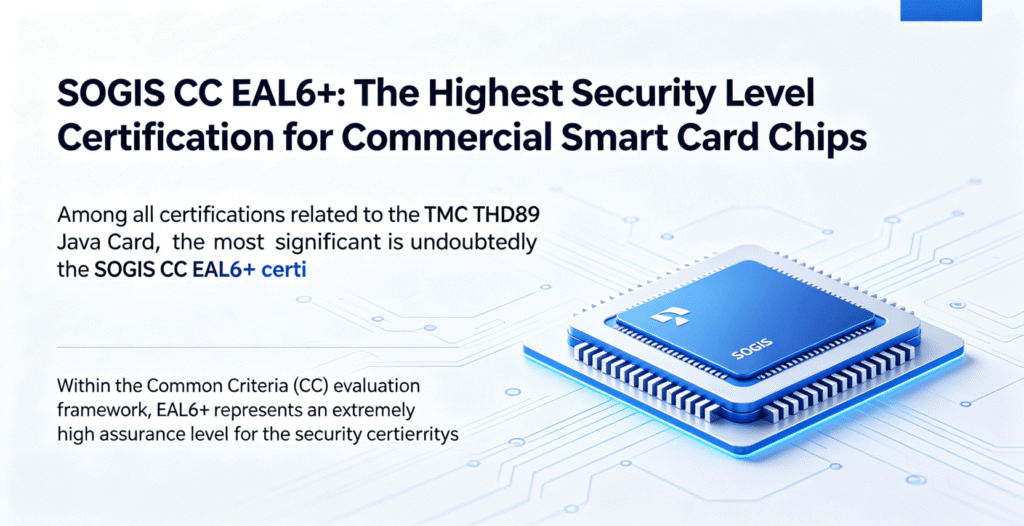
Among all certifications related to the TMC THD89 Java Card, the most significant is undoubtedly the SOGIS CC EAL6+ certification. Within the Common Criteria (CC) evaluation framework, EAL6+ represents an extremely high assurance level for the security of integrated circuits and smart card chips.
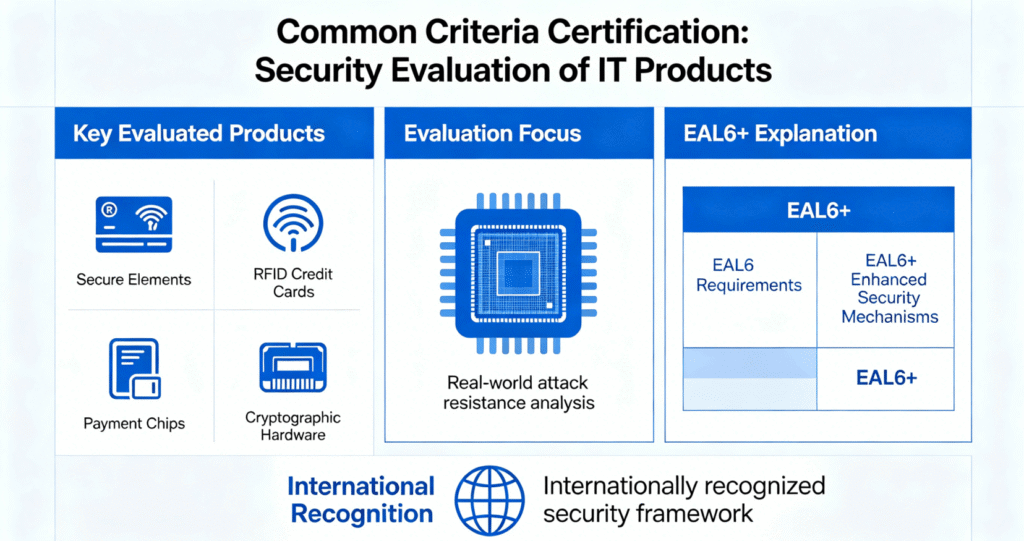
Common Criteria certification is an internationally recognized framework for evaluating the security of IT products, particularly secure elements, RFID credit cards, payment chips, and cryptographic hardware. The evaluation process analyzes the chip’s ability to withstand advanced attack techniques in real-world environments. The “+” in EAL6+ indicates that the chip incorporates enhanced security mechanisms beyond the EAL6 requirements.
The Importance of EAL6+ for Financial Payments
Financial payment cards are constantly exposed to a variety of sophisticated attack methods. Attackers may attempt to steal encryption keys, tamper with transaction logic, or bypass authentication mechanisms. Therefore, payment-grade chips must be able to withstand both software and hardware attacks.
The TMC THD89 Java card has obtained SOGIS CC EAL6+ certification and offers robust resistance to interference:
Physical probing attacks:
Attackers may attempt to physically access the chip’s internal circuits using microscopic probing tools. The THD89 integrates advanced anti-tampering mechanisms to protect sensitive data from physical theft.
Side-channel attacks (DPA/SPA):
Differential Power Analysis (DPA) and Simple Power Analysis (SPA) are used to analyze power consumption patterns during cryptographic operations. The THD89 Java smart card incorporates multiple countermeasures to minimize information leakage during encryption.
Fault Injection Attacks (DFA):
DFA artificially introduces faults during chip operation to reveal encrypted information. The THD89 includes dedicated protection mechanisms that can detect and mitigate abnormal operational behavior.
Why EAL6+ Ranks the THD89 Among the Top Payment Chips?
Only a handful of commercial smart card chips worldwide have achieved EAL6+ certification. This certification demonstrates that the TMC THD89 Java card meets the stringent security requirements of financial institutions, government systems, and the international payment ecosystem. For banks and payment institutions, this level of certification significantly reduces security risks associated with card cloning, data theft, and transaction tampering.
The TMC THD89 Java Card supports national cryptographic algorithms
Another major advantage of the TMC THD89 Java Card is its support for China’s national cryptographic standards, including:
- SM2 public-key cryptography algorithm
- SM3 cryptographic hash algorithm
- SM4 symmetric cryptography algorithm
These algorithms are widely used across domestic financial systems, government infrastructure, and the national security sector. The THD89 Java Card supports both international and domestic cryptographic systems, providing robust compatibility for the Chinese banking environment while maintaining global payment interoperability.
National Cryptography Administration Level 2 Certification
The chip has also passed the National Cryptography Administration’s Level 2 certification. This certification confirms that the platform meets the compliance requirements of domestic financial institutions and government-level information systems. For payment applications, this certification is particularly important, as domestic banking systems increasingly require secure chips to comply with national cryptography regulations.
The Importance of Domestic Encryption Technology for Financial Credit Payments
In the modern financial ecosystem, payment chips must not only comply with international standards but also meet local regulatory requirements. The THD89 Java card supports SM2, SM3, and SM4 protocols, enabling it to operate effectively in the following environments:
- Domestic banking systems
- Government financial infrastructure
- Public transportation payment systems
- National identity and e-ID programs
- Secure enterprise authentication environments
This dual compatibility significantly enhances deployment flexibility for card issuers and financial institutions.
How the THD89 Java Card Enables Coexistence of PBOC and EMV Standards?
One of the most commercially valuable features of TMC THD89 Java Cards are its “EMV Single-Chip Dual-Application” technology.
Traditional payment cards typically require separate application environments for domestic and international payment systems. The THD89 Java Card integrates both environments into a single secure chip platform. This architecture enables simultaneous compliance with:
- Domestic financial standards of the People’s Bank of China
- International EMV payment standards
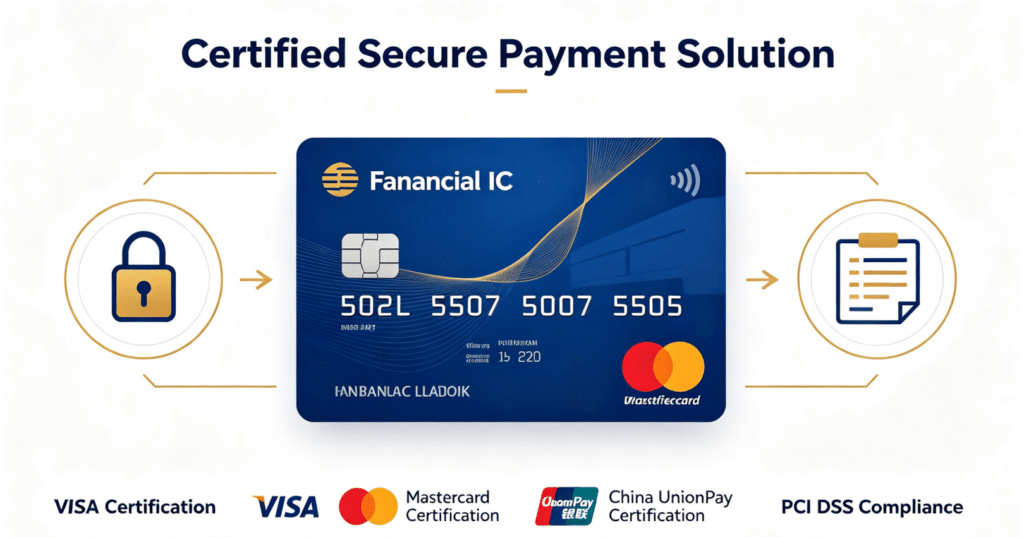
So, a single RFID credit card can support both domestic transactions in China and international EMV payment networks.
Why the Dual-Application Architecture Improves Issuer Efficiency?
For financial institutions, managing multiple card systems significantly increases operational costs. The THD89 Java smart card reduces this complexity by integrating multiple payment standards into a single secure platform.
This approach simplifies:
- Card issuance processes
- Payment application management
- Personalization processes
- International deployment strategies
So, banks can deploy more flexible and scalable RFID credit card solutions.
TMC THD89 Java Card Meets Relevant International Certifications
EMVCo Certification:
EMVCo certification is one of the most important certifications in the global payments industry. The EMV standard governs secure chip-based payment transactions worldwide. By meeting EMVCo compliance requirements, the THD89 Java Card demonstrates its compatibility with international banking and payment infrastructures.
This certification supports deployment in the following environments:
- Contact payment cards
- Contactless payment cards
- RFID credit cards
- NFC banking applications
- International POS systems
PCI PTS Certification:
PCI PTS certification is dedicated to protecting payment transactions and sensitive cardholder information. For financial payment systems, it ensures the secure handling of the following:
- PIN data
- Cardholder credentials
- Transaction authentication information
- Secure payment communications
The THD89 Java smart card complies with the broader PCI security ecosystem required by international financial institutions.
GSMA SAS-UP Certification:
GSMA SAS-UP certification relates to a high-security embedded secure element ecosystem. This certification demonstrates that the THD89 platform supports highly secure manufacturing and deployment environments suitable for:
- Secure identity systems
- eSIM ecosystems
- Financial authentication systems
- Mobile payment infrastructure
The TMC THD89 Java Card is one of the most secure financial payment platforms available
With its extensive portfolio of certifications and advanced security architecture, the TMC THD89 Java Card has become a highly secure and globally competitive payment chip platform.
Its SOGIS CC EAL6+ certification places it among the world’s highest-security commercial smart card chips. It is capable of withstanding physical probing, DPA/SPA side-channel analysis, and DFA fault-injection attacks, demonstrating robust protection against complex financial threats. Additionally, it supports the SM2, SM3, and SM4 national cryptographic algorithms and has obtained Level 2 certification from the State Cryptography Administration, ensuring compliance with the requirements of China’s domestic financial and government systems. Overall, it is a high-security financial payment platform capable of supporting modern banking systems, secure international transactions, and next-generation RFID credit card applications.