
 English
  Español


An access control card is a digital keys that control access to offices, campuses, factories, and residential buildings. As organizations increasingly rely on these contactless credentials, protecting the personal and identity information stored in these systems has become a critical security issue. However, many legacy systems rely on outdated encryption mechanisms or simple UID authentication, making sensitive cardholder information vulnerable to cloning, fraudulent transactions, or unauthorized interception. To address these security concerns, modern security technologies, such as AES encryption, have been integrated into next-generation cards, including the MIFARE Plus S access card. These cards significantly enhance authentication protocols and data protection mechanisms, ensuring that information stored on the MIFARE Plus S card remains secure even in complex environments.
Methods and locations of cardholder information leakage
Before developing a solution, you must understand the pathways through which data is leaked in a real-world system. Access cardholder data leaks typically occur at the following five levels:
Card-to-reader channel: Attacks such as passive eavesdropping, replay attacks, and skimming can capture unprotected UIDs or responses from flawed cards. Relay attacks can extend the reading range and authorize access without physical presence.
Reader Firmware/Hardware: Unpatched readers may log or leak card data. Insecure serial or network connections can forward plaintext credential data to controllers or cloud servers.
Personalization and Production: If chip keys or personalization data are not securely transmitted between vendors, attackers can clone or mass-produce counterfeit cards.
Backend Systems: Weak APIs, poor authentication, or inadequate access controls in databases and token stores expose the mapping between UIDs and identities.
In fact, legacy systems often exacerbate these weaknesses: they rely on UIDs or weak symmetric encryption schemes, multiple readers share keys, and there is little monitoring. The result is that attackers can read or copy credentials using only simple lab-grade techniques. To prevent information leakage, confidentiality and integrity issues must be addressed at the point of interaction, and robust operational controls must be maintained throughout the entire lifecycle.

Security Risks in Access Control Card
Despite the widespread use of traditional access control cards, they are often vulnerable to security vulnerabilities. Many older systems rely on low-frequency cards or authentication methods based on basic UIDs. In this case, the card transmits an identifier to the reader without any encryption. Attackers can easily capture this information using inexpensive RFID tools and copy it onto counterfeit cards.
Another significant risk is card cloning, in which attackers copy card credentials by intercepting communication between the access control card and the reader. Without strong encryption protocols, data transmitted during authentication could be intercepted and reused. Furthermore, inadequate backend database security and insufficient encryption and access controls could also lead to the leakage of cardholder information. These vulnerabilities demonstrate that modern organizations must transition to more advanced technologies, such as the MIFARE Plus S card, which integrates AES encryption to ensure secure communication between the card and the reader.
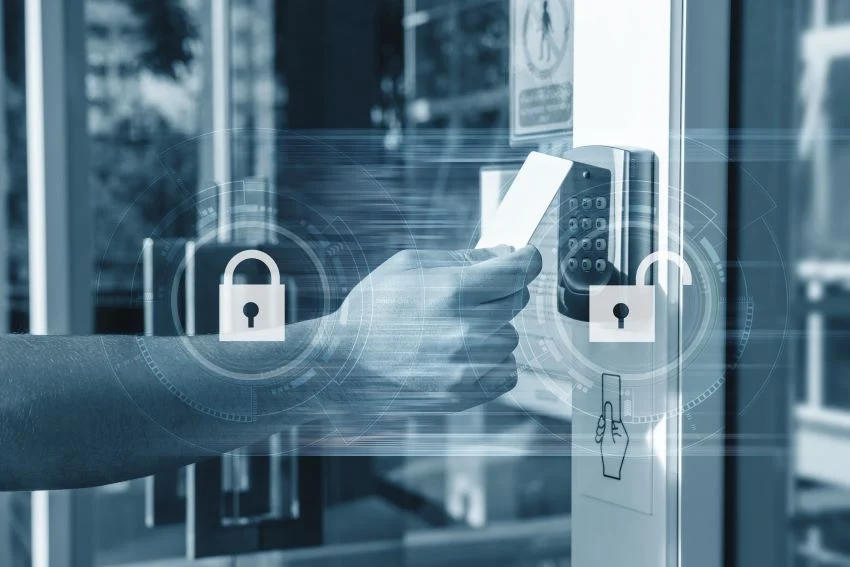
The Importance of Strong Encryption for Access Card Protection
Encryption is a primary defense against unauthorized access to cardholder data. Without encryption, any information transmitted by the card could be intercepted or tampered with. AES encryption provides a secure layer that protects the identity and authentication processes for access control cards. AES-based authentication ensures that an encrypted challenge-response mechanism protects every communication session between the card and the reader. Even if an attacker intercepts the communication channel, they cannot obtain useful data. For organizations managing thousands of credentials, implementing AES encryption in systems such as the MIFARE Plus S access card significantly reduces the risk of data breaches and credential duplication. Furthermore, it aligns the security architecture with modern cybersecurity standards.
Implementing AES Security in Access Control Cards
The MIFARE Plus S access card uses AES encryption to protect stored data and secure communication with the reader. Unlike older card technologies, the MIFARE Plus S card supports secure two-way authentication between the card and the reader. This means that both devices must authenticate each other before any data exchange can occur. Once authentication is complete, an encrypted communication channel is established. This process prevents attackers from intercepting sensitive data or replaying previous authentication sessions. Additionally, AES encryption supports secure key diversification, ensuring that each card has a unique encryption key.
Another key advantage is the MIFARE Plus S card’s ability to migrate from legacy systems. Enterprises can upgrade their infrastructure incrementally without replacing all readers simultaneously, making the transition to AES-based security both feasible and cost-effective.

Best Practices for Preventing Data Breaches
Even with advanced encryption technologies, organizations must implement comprehensive security strategies to protect cardholder information fully. First, secure key management is crucial. The generation, storage, and distribution of encryption keys should all be handled through secure systems to prevent unauthorized access.
Second, system administrators should regularly update reader firmware and monitor system logs for anomalous activity. Suspicious authentication patterns may indicate cloning attempts or unauthorized card use. Third, organizations should adopt layered security strategies. Combining MIFARE Plus S access cards with a secure access management platform, encrypted communication networks, and strict credential management policies creates a robust security ecosystem. Finally, employee security awareness and operational discipline are equally important. Security is not only a technical issue but also a management practice. Appropriate training ensures that access credentials are properly safeguarded and reported promptly in the event of loss or disclosure.
Enhancing Security to Prevent Information Breach
As physical security systems and digital infrastructure become increasingly interconnected, the importance of protecting cardholder data is growing. Traditional access control cards rely on weak encryption or simple identifiers, potentially exposing organizations to serious security risks, including credential cloning and information breaches. By using an AES-encrypted access control card, businesses can significantly enhance their access control systems. These cards offer secure authentication, encrypted communication, and flexible migration paths for upgrading existing infrastructure.