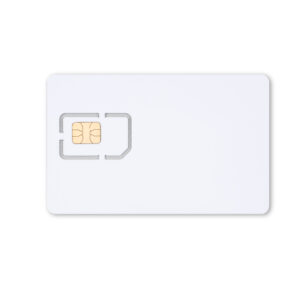
The NXP P71 Jcop4 J3R200 Java Smart Card is a high-performance dual-interface Java smart card chip developed by NXP based on its JCOP 4.0 security operating system. It utilizes the SmartMX™ security controller architecture and is compliant with JavaCard 3.0.5. GlobalPlatform 2.3, and is specifically designed for high-security applications such as financial payments, e-government, digital RMB hardware wallets, and integrated transit cards. The chip is Common Criteria EAL6+ certified and supports both global mainstream cryptographic standards and Chinese national cryptographic algorithms. As a benchmark product in the international high-end smart card market, it is widely deployed in core financial and government systems across China, Europe, and the Asia-Pacific region.
The J3R200 Java Smart Card is designed for developers and manufacturers requiring a secure and programmable smart card platform. Powered by the NXP JCOP4 operating system, it enables the deployment of multiple Java Card applications while providing strong security protection for sensitive data and transactions. The card is suitable for customized solutions in financial services, identity management, authentication systems, and other security-focused applications.
J3R200 Java Smart Card Key Technical Features:
High-security architecture: Integrates a hardware security module (HSM) and supports protection against side-channel attacks (SPA/DPA), fault injection, and physical tampering, meeting financial-grade and government-grade security requirements.
Dual-interface communication:J3R200 Java Smart Card supports both contact (ISO/IEC 7816) and contactless (ISO/IEC 14443 Type A/B) interfaces simultaneously, with contactless communication speeds up to 848 kbit/s and up to 3.2 Mbit/s in VHBR mode.
Java Card 3.0.5 Compatibility: Runs on the JCVM, supporting dynamic loading of multiple applets, isolated execution, and remote management (GlobalPlatform 2.3).
Full Algorithm Support:
1. Symmetric Encryption: AES-128/192/256, 3DES, SM4 (National Cryptographic Standard)
2. Asymmetric encryption: RSA (1024–4096 bits), ECC (NIST P-256, Brainpool, SM2)
3. Hash algorithms: SHA-256, SM3
4. True Random Number Generator (TRNG): Complies with AIS-31 Class B/C standards to ensure secure key generation.
Remote Lifecycle Management:J3R200 JCOP4 Smart Card supports over-the-air card issuance, application downloads, and key updates via secure channels (SCP02/SCP03), suitable for long-term financial and government card systems.
Low-Power Design: Supports wide-voltage operation from 1.62V to 5.5V and features a sleep mode, J3R200 Java Card, making it suitable for battery-powered terminal devices.
Financial Payments: The J3R200 payment smart card is designed for EMV-compliant chip card applications and can be used in debit and credit card systems deployed by financial institutions, including major state-owned banks such as the Industrial and Commercial Bank of China and China Construction Bank. It supports secure payment functions such as “QuickPass” and PIN-authenticated transactions for reliable financial services.
Digital RMB Hardware Wallet: As a Digital wallet Java Card solution, J3R200 enables secure data storage, transaction protection, and application execution for digital currency hardware wallets. It supports offline payment, dual-offline transfer, balance display, and dynamic QR code functions, providing a reliable security solution for digital RMB applications in various payment scenarios.
Urban Public Transportation: The J3R200 Java Card for Payment Applications provides a secure solution for urban transit payment systems, supporting convenient and reliable small-value transactions. As a J3R200 NFC Java Card, it enables fast contactless access across multiple transportation scenarios, including subways, buses, and ferries. It can be integrated into “One Card” systems in cities such as Guangzhou, Nanjing, and Wuhan, improving the efficiency of daily public transportation payments.
E-Government Identity Credentials: The eID Java Smart Card provides a secure platform for digital identity applications, supporting certificate issuance systems for provincial e-ID cards, social security cards, and residence permits. It enables encrypted biometric data storage and secure online identity verification, helping government agencies deploy reliable electronic identity solutions in pilot provinces such as Guangdong and Jiangsu.
Enterprise Security and IoT: Applied to enterprise access control cards, T-Box communication modules, and industrial control terminals to enable device identity authentication, secure firmware boot, and encrypted communication links.
Cases
Bank of China Digital RMB Visual Hardware Wallet (Shenzhen): The J3R200 Java Smart Card serves as the underlying security component for Bank of China’s digital RMB visual hardware wallet, which was unveiled at the Shenzhen International Financial Expo in November 2024. The wallet supports functions including visual display, tap-to-pay, and QR code scanning, while utilizing the secure processing capabilities of J3R200 to enable a 1-millimetre-thick e-ink display and both passive and active dual-mode operation. The solution has been deployed through 34 self-service card issuance machines at Shenzhen Airport and border crossings, providing convenient digital RMB services for elderly users and international visitors.
Domestic Substitution of Financial IC Cards: The NXP P71 J3R200 Java Card provides a high-security and compatible solution for financial IC card upgrade projects. In EMV card replacement programs of major state-owned banks, it is being adopted to replace outdated financial IC cards while supporting large-scale issuance exceeding 100 million cards annually. With compliance with EMVCo and FIPS 140-2 certification requirements, the J3R200 Java Card helps financial institutions deploy secure and reliable payment card systems.
Government Terminal Integration: The Government ID smart card solution based on the NXP P71 J3R200 is designed for secure government identity and public service applications. In the 2025 electronic ID card system upgrade by the Guangdong Provincial Special Document Production Centre, CPU card chips supporting national cryptographic algorithms were required. With National Cryptographic Level 2 certification and an EAL6+ security rating, the NXP P71 J3R200 became one of the candidate solutions for integration into public security mobile law enforcement terminals and government self-service kiosks.

 English
  Español