
 English
  Español


The operating frequency of an RFID smart card determines its communication method, read range, security, and optimal use cases.
Selecting the appropriate frequency requires balancing technical performance with actual business needs.
125 kHz RFID cards may be ideal for simple access control.
13.56 MHz RFID cards, on the other hand, may be better suited for secure identity verification, transportation, or smart campus applications.
UHF cards, on the other hand, are suitable for long-range reading, batch scanning, or asset visibility. Each RFID smart card frequency addresses different operational challenges and has its own set of advantages and disadvantages.
125 kHz RFID Smart Card: Simple, Reliable, and Widely Used
125 kHz RFID cards are among the most mature products in low-frequency RFID technology. They are easier to deploy, highly fault-tolerant in daily use, and highly compatible with many traditional access control systems. In environments where the primary goal is close-range identification, these cards remain a reliable choice.
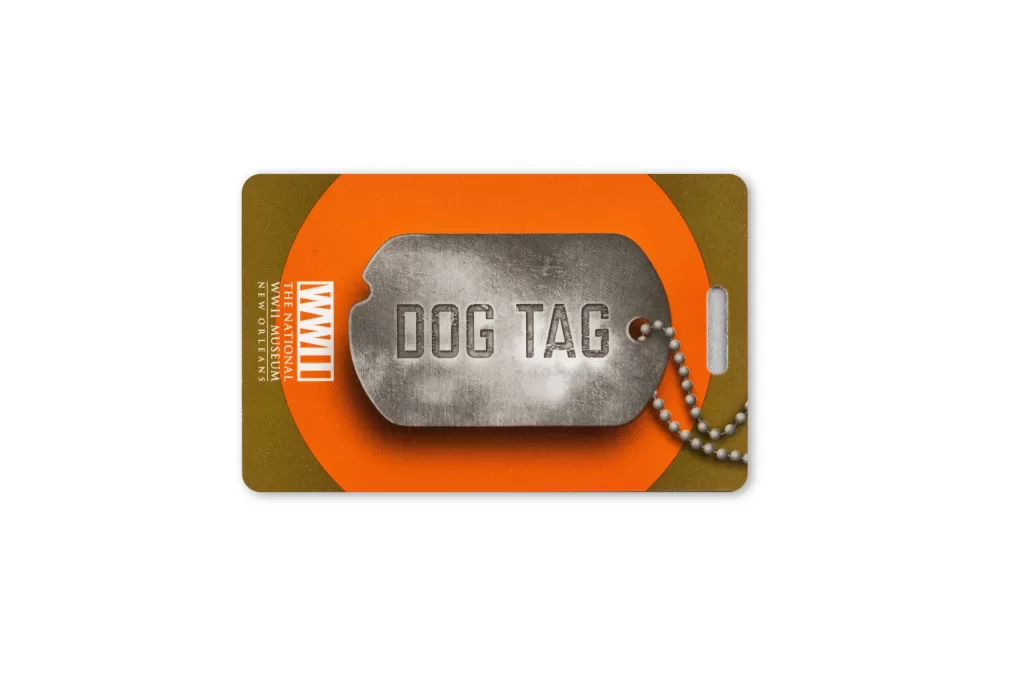
Key Advantages of 125 kHz RFID Cards
One of the main advantages of 125 kHz RFID cards is their simplicity. People typically use these cards for close-range access applications such as access control, parking, time and attendance tracking, and basic authentication. Their communication model is straightforward, helping to reduce setup complexity and making system behavior easy to predict.
Another advantage is fault tolerance. In practical use, low-frequency RFID smart cards often perform well even in complex environments prone to orientation issues, minor interference, or user error, which can cause reading problems. For users who need to tap or hold the card near the reader, the process is quick and convenient, and the operation is very familiar.
Cost is also a significant factor. For large-scale deployments where the cards themselves are consumables or semi-disposable access tokens, 125 kHz RFID cards may be a practical choice.
Key Limitations
The primary limitation of 125 kHz technology is its limited functionality. It is not designed for advanced data processing, higher transmission speeds, or complex security frameworks. In many cases, it serves merely as a basic identifier rather than a smart credential. Another limitation is the short read range. While this may be an advantage for controlled access points, it limits the card’s use in applications that require rapid scanning, multi-item detection, or contactless interactions.
Ideal Applications
125 kHz RFID cards are typically a suitable choice when tasks are simple and the environment is controlled. Common use cases include:
Office and residential access control
Hotel lock systems
Basic time-and-attendance systems
Parking permits
Low-complexity identification programs
If your project requires security authentication, broader ecosystem compatibility, larger memory capacity, or future expansion into smart card applications, the 125 kHz frequency is generally insufficient.
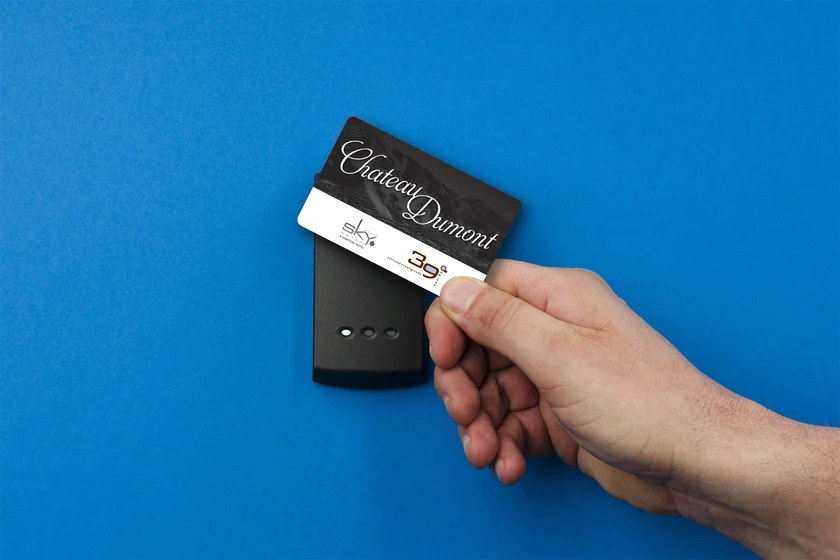
13.56 MHz RFID Smart Card: The Smart Card Standard for Security and Interoperability
Of the three frequency bands discussed, the 13.56 MHz RFID band is the most widely used in modern smart card systems. It has become the preferred choice for applications requiring security, interoperability, and support for richer data structures. This frequency band is closely associated with contactless smart cards, public transportation cards, campus ID systems, and many Java Card implementations.
What Sets 13.56 MHz RFID Cards Apart
The primary advantage of 13.56 MHz RFID cards lies in their capabilities, which extend far beyond simple identification. They support more advanced protocols and stronger authentication schemes, enabling broader interoperability with a wider range of devices and infrastructure. Additionally, they benefit from robust ecosystem support. Readers, middleware, and software platforms designed for this frequency band are widely adopted, and many mature standards and application models have been built around it.
What Are Its Limitations?
Although the 13.56 MHz band offers significant advantages, it is not always the optimal choice. Its read range is typically shorter than that of the UHF band, limiting its application in long-range or bulk-detection environments. Furthermore, while the ecosystem for this band is extensive, not all readers, credential formats, or application profiles are fully interchangeable. Project teams still need to carefully verify compatibility.
What are the most suitable applications?
13.56 MHz RFID cards are commonly used for:
Public transportation ticketing
Corporate and campus ID systems
Security access control
Library and membership systems
Smart payment and multi-service authentication programs
Java Card-based security projects
For organizations seeking a secure, modern, and widely supported RFID smart card platform, 13.56 MHz is often the most balanced choice.

UHF RFID Smart Card: Long-Range Reading and Efficient Identification
The design philosophy behind UHF cards differs significantly from that of cards operating in the 125 kHz and 13.56 MHz frequency bands. UHF cards are engineered to achieve longer read ranges, faster bulk scanning, and more efficient identification across larger areas. This makes them particularly useful in logistics, asset tracking, and controlled automated environments.
Key Advantages of UHF Cards
The most significant advantage of UHF cards lies in their transmission range. Compared to the two aforementioned RFID smart card frequencies, UHF cards typically offer longer read ranges, with specific distances depending on antenna design, reader configuration, and environmental conditions. This makes them ideal for applications where cards need to be detected without close physical contact.
At the same time, UHF technology excels in terms of throughput. Readers can process tags quickly, particularly in scenarios involving multiple items, moving objects, or high-throughput workflows. Consequently, UHF technology is commonly used at warehouse gates, supply chain checkpoints, and asset visibility systems.
Limitations of Deployment
While UHF cards offer powerful capabilities, they are not a one-size-fits-all solution. Their longer transmission range can actually be a disadvantage in situations requiring precise user control, such as security access control systems. In these scenarios, cards that are too easy to read may not be the most secure or intuitive choice.
UHF systems are also more sensitive to environmental design. Reader placement, antenna orientation, material interference, and surrounding infrastructure all play a role. A project that seems simple on paper may require careful fine-tuning in practical implementation. Consequently, UHF systems are best suited for teams that understand both the hardware and the specific application context.
What are the most suitable applications?
UHF cards are typically used for:
Logistics and warehouse tracking
Asset management
Supply chain identification
Vehicle and access control automation
Batch scanning and inventory workflows
Industrial access systems requiring longer read ranges
When UHF Is Not the Right Choice
If you want to create secure contactless access control, simplify credential management, or provide users with a familiar RFID smart card experience, UHF systems may feel too specialized for the job. It is not a one-size-fits-all solution for all RFID cards, but rather a high-performance tool suited for specific operational environments.
How to Choose the Right RFID Smart Card?
Choosing the right RFID smart card involves more than just comparing frequencies in isolation. The best choice depends on the card’s intended use, existing infrastructure, and future changes in usage conditions and environments. A frequency that appears efficient on paper may not be suitable for actual deployment.
- Required Read Range
First, consider the distance. If the card only needs to be read at close range, a 125 kHz RFID card may be sufficient. If more secure and feature-rich contactless interactions are required, a 13.56 MHz RFID card is typically a better choice, and if the project requires long-range detection or batch reading, UHF cards should be the first consideration.
- Security Requirements
Security is another important selection criterion. Basic RFID smart cards may suffice for low-risk access control needs. Still, for sensitive identity management projects, 13.56 MHz RFID cards and the Java card ecosystem typically provide a more robust foundation when applications require encrypted communication, authentication, or multi-application support.
- Environment and Operating Conditions
The physical environment is critical. Indoor offices, residential entrances, schools, factories, warehouses, and transportation systems all have different requirements for RFID performance. A frequency that performs well in one environment may be less stable in another, particularly when factors such as metal, liquids, or reader placement are involved.
- User Experience
Card design should align with end-user behavior. For example, access control systems require intuitive “tap-and-go” operation; logistics teams need fast turnaround and minimal manual intervention; and public transportation systems demand speed, convenience, and reliability. When card design aligns with user behavior, user acceptance increases, and error rates decrease.
- Compatibility with Existing Systems
Many buyers already have readers, backend software, or credential formats in place. In such cases, compatibility is more important than theoretical performance. Replacing an entire ecosystem is costly. Therefore, it is essential to ensure that the RFID smart card is as compatible as possible with existing infrastructure before procurement.
Please select an RFID smart card based on your use case!
The right RFID smart card should meet operational objectives with minimal compromise. 125 kHz RFID cards are typically best suited for simple, low-cost, short-range identification applications. 13.56 MHz RFID cards offer the best overall balance of security, flexibility, and ecosystem support, making them the standard choice for many smart card and Java card applications. When read range, speed, and batch identification are critical, UHF cards are the appropriate choice.