
 English
  Español


Slow transaction processing speeds for payment cards can ripple through every stage of the process. Users will first notice the delay, and merchants will subsequently experience longer wait times, reduced terminal throughput, increased workflow interruptions, and a diminished overall experience. Consequently, speed has become a core criterion for users selecting Java cards. The J3R150 Java card is based on the NXP JCOP 4 P71 platform, designed specifically for EMV and secure identity applications, and supports fast contact, contactless, and dual-interface operations. Its contact interface reaches speeds of up to 614 kbit/s, its contactless interface up to 848 kbit/s, and its VHBR speed up to 3.2 Mbit/s, directly improving transaction speed.
Slow transaction speeds on the J3R150 Java card can impact transaction efficiency
Slow card swiping speeds affect not only the individual user standing in front of the reader but also the entire transaction process. At busy access control points, slow swiping speeds can cause queues; during payment, they reduce checkout efficiency. In scenarios requiring frequent use of bank cards, this issue becomes particularly severe. Offices, transportation systems, campus projects, security facilities, and hotel services all rely on fast, predictable responses. If authentication delays occur with Java cards, users will notice immediately. Over time, these delays become part of the brand experience. Even if the underlying security is technically strong, people often see a slow system as outdated.
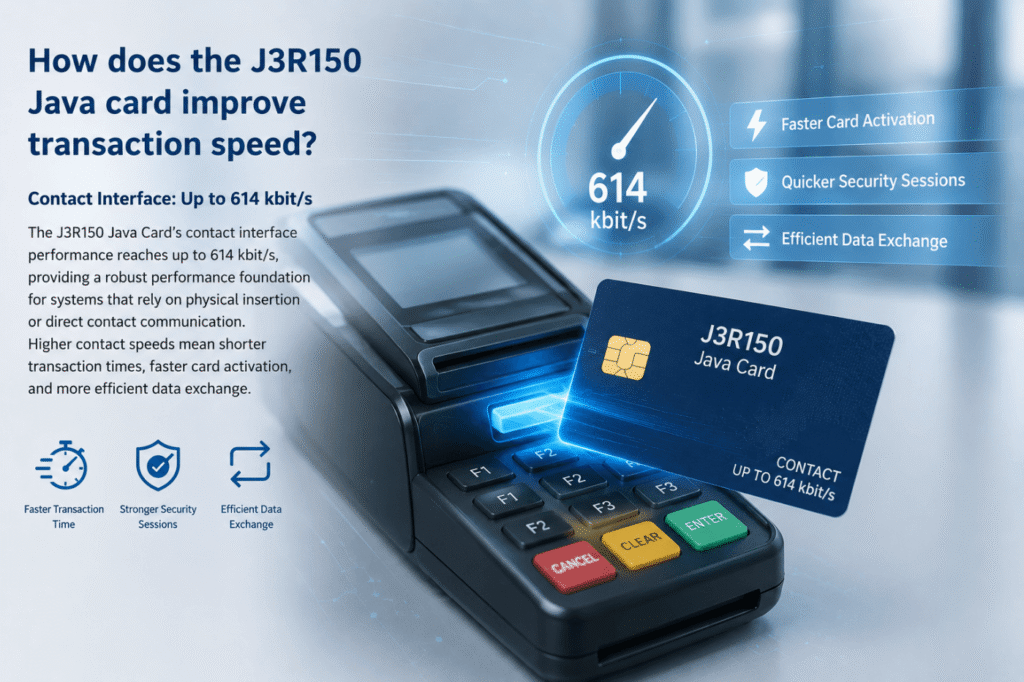
How does the J3R150 Java card improve transaction speed?
The J3R150 Java Card’s contact interface performance reaches up to 614 kbit/s, providing a robust performance foundation for systems that rely on physical insertion or direct contact communication. Higher contact speeds mean shorter transaction times. This translates to faster card activation, quicker establishment of security sessions, and more efficient data exchange between the card and the terminal. These advantages are particularly valuable in environments such as banking, government identity verification, or enterprise security systems.
Less time is spent on the card “communicating” with the reader, allowing more time to complete the actual transaction. When the card can process contact operations faster, users experience smoother system responsiveness. Delays and complaints encountered by operators are also reduced. Deployment is easier to scale as terminal queues move faster and workflows become more streamlined.
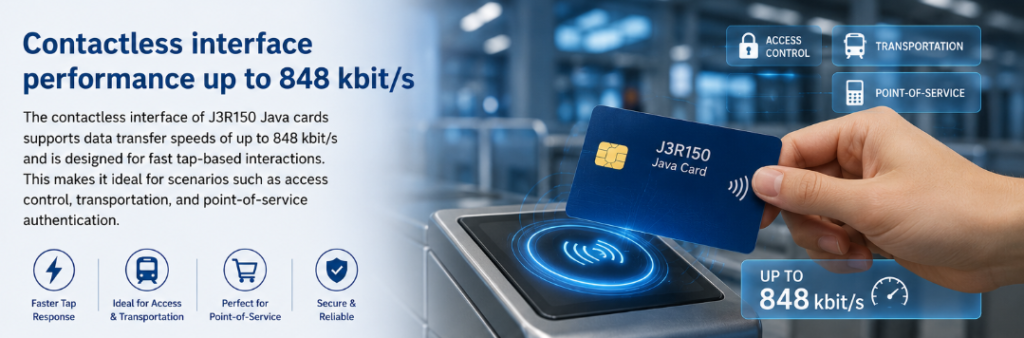
Contactless interface performance up to 848 kbit/s
The contactless interface of J3R150 Java cards supports data transfer speeds of up to 848 kbit/s and is designed for fast tap-based interactions. This makes it ideal for scenarios such as access control, transportation, and point-of-service authentication.
People usually judge contactless payment systems by how fast they respond. If a payment takes too long after you tap your card, users may start to hesitate. If the card responds immediately, the user experience is seamless. The J3R150 Java card supports a faster contactless payment interface, reducing the friction caused by slow security system responses. For organizations that process a large volume of card transactions daily, the JCOP J3R150 card helps maintain smooth operations while still providing the security features required by smart card systems.
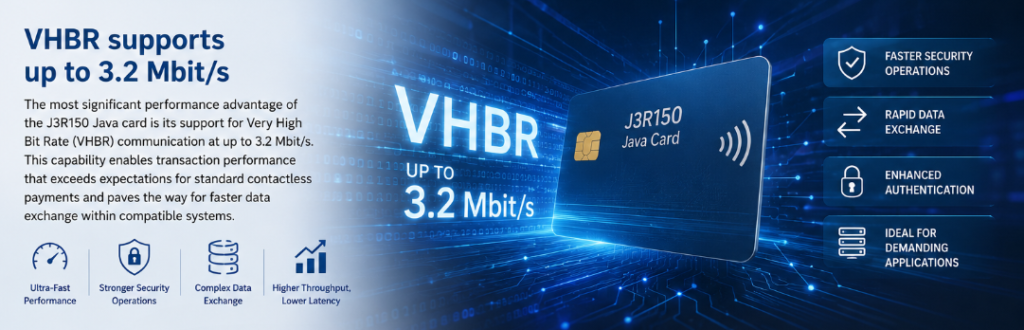
VHBR supports up to 3.2 Mbit/s
The most significant performance advantage of the J3R150 Java card is its support for Very High Bit Rate (VHBR) communication at up to 3.2 Mbit/s. This capability enables transaction performance that exceeds expectations for standard contactless payments and paves the way for faster data exchange within compatible systems.
Transaction speed depends not only on the initial swipe speed but also on the speed of subsequent communication sessions. When a card can transmit data more quickly, security operations are completed faster. This benefits applications requiring more complex authentication and improves the response speed of systems that need to exchange data during authentication, authorization, or secure application processing. From a product perspective, VHBR support shows that the J3R150 card doesn’t just meet requirements it actively reduces latency and boosts throughput in demanding environments.
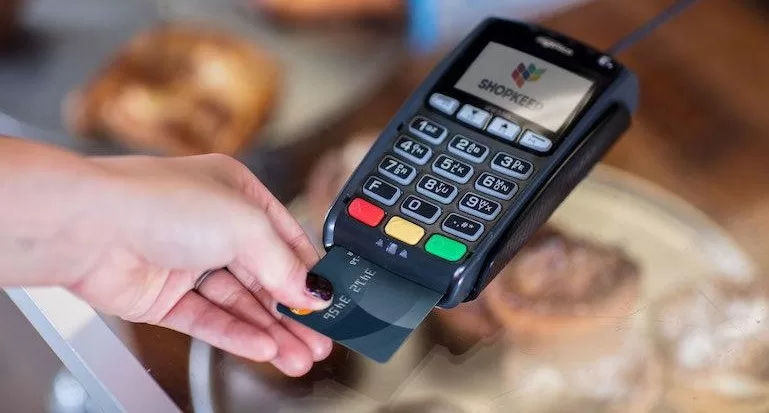
Delivering a Faster Transaction Experience for Users
The J3R150 Java card effectively addresses slow transaction speeds by improving communication performance across both contact and contactless interfaces. Its contact interface supports data transfer rates of up to 614 kbit/s, while the contactless interface supports up to 848 kbit/s; its VHBR capacity reaches 3.2 Mbit/s. These capabilities significantly reduce transaction latency, improve the user experience, and enable higher transaction speeds in high-load environments.