
 English
  Español


A Java Card is more than just a smart card; it is a highly flexible platform capable of meeting the specific operational and security requirements of numerous industries. Whether applied in banking, public transportation, corporate access control, or identity verification, its effectiveness is directly correlated with its degree of customization. Consequently, customizing a Java Card involves not merely selecting an aesthetic design or a specific chip, but rather adopting a comprehensive, holistic approach. By rationalizing compliance requirements during the customization process, one can ensure not only robust security but also scalability and compatibility with existing hardware and software systems. By aligning the chip model, interface type, material durability, printing technology, and functional enhancements with the intended application, enterprises can deploy highly reliable and versatile Java Card solutions.
What Are the Customization Options for Java Card?
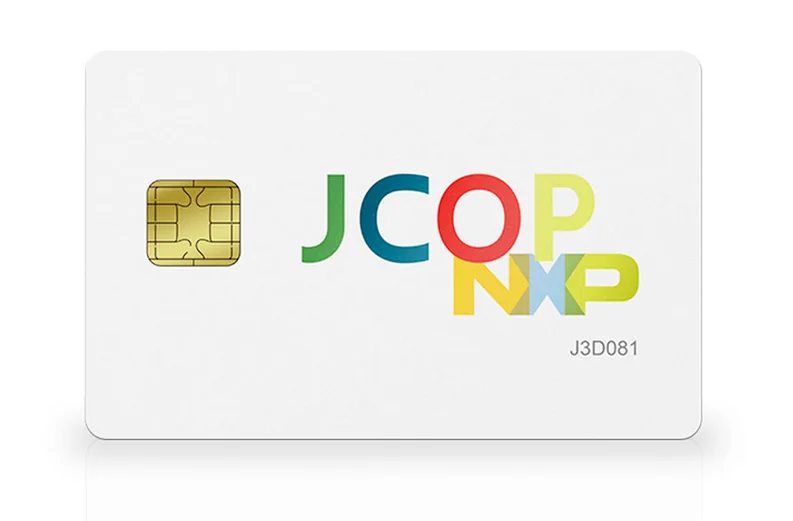
The appropriate chip lies at the very heart of any Java Card customization project, as it dictates both performance and security capabilities. DCCO offers the NXP JCOP series of chips, including the J2A040, J3H081, J3R110, J3R150, and J3R180, which support Java Card versions ranging from 2.2 to 3.0 and hold EAL5+/6+ security certifications. These chips work especially well for financial and high-security applications. They offer fast processing and secure memory management while helping you meet international standards.
Other options include chips from Infineon’s SECORA and SLE series, such as the SLE78 and SECORA Pay, which provide enhanced security features, including support for EMV and China’s national encryption standards. Additional chip options include those from Fudan Microelectronics (e.g., FM1280), Huada Electronic, and Unigroup Guoxin; these chips offer more cost-effective alternatives without compromising performance, making them particularly suitable for regional deployments that require adherence to localized standards.
Material Selection for Custom Java Cards
Standard material options include PVC, PET, and ABS. PVC is highly versatile and well-suited for large-scale deployments and basic operational requirements. PET offers exceptional durability and environmental resistance, making it ideal for cards subjected to high wear and tear or used in outdoor environments. ABS boasts outstanding structural integrity, making it the perfect choice for applications requiring enhanced physical strength or a thicker card profile. When you customize a Java Card, you need to carefully match the materials to the functional requirements, the operating environment, and the intended use case. For instance, cards used for transit fare collection must be resistant to abrasion and bending. In contrast, corporate ID cards might prioritize surface finishes to enhance brand image. The selection of appropriate materials directly impacts the card’s lifespan, user satisfaction, and operational reliability.
Printing and Visual Customization
In the context of Java Card customization, the printing component determines both the aesthetic appeal and the clarity of operational information. Technologies such as offset printing, screen printing, and digital printing allow for precise control over graphics, text, variable data, and security features. Cards can be integrated with barcodes, QR codes, variable serial numbers, or specific security designs to facilitate traceability, identity verification, and brand promotion. We also offer the integration of special inks, holograms, and UV coatings to add extra layers of anti-counterfeiting protection, while variable data printing aids in batch identification. High-quality printing ensures that the cards are visually appealing and functionally practical, thereby elevating the professional image and bolstering trust among users and stakeholders. Furthermore, meticulous attention to printing details minimizes the risk of errors during card identification or system integration processes, ultimately enhancing the card’s operational efficiency and durability.

Interface and Functional Workflow Customization
The choice of Java Card interface and functional workflow directly impacts usability and system compatibility. DCCO’s available options include contact cards, contactless cards, and dual-interface cards, each tailored to suit different operational environments. Contact cards are designed to work with traditional card readers, while contactless cards support “tap-and-go” functionality. Dual-interface cards offer maximum flexibility, capable of supporting multiple systems simultaneously. Functional enhancements—such as embossed numbering, magnetic stripes, signature panels, gold or silver hot stamping, UV coatings, anti-counterfeiting laminates, and PSAM module encapsulation—further bolster security, brand image, and operational capabilities. These enhancements enable enterprises to customize their Java Cards to align with specific technical requirements and user expectations, thereby delivering a reliable and secure experience across a wide range of application scenarios.

Java Card Packaging, Lead Times, and OEM/ODM Delivery Support
The final stage of Java Card customization is delivery. Even a meticulously designed card must be properly packaged, clearly labeled, and delivered on schedule. For many clients, this phase determines whether a project launches smoothly or stalls under operational pressure. DCCO provides anti-static packaging and custom labeling for Java Cards. Anti-static packaging helps protect sensitive electronic components during shipping and handling. At the same time, custom labeling enhances inventory control, batch identification, and logistics management.
Lead Times
Our delivery framework is designed for flexibility:
- In-stock blank cards are available for immediate use.
- Small-batch prototyping (100 units) takes approximately 7 days.
- Large-scale mass production takes approximately 15 days.
OEM/ODM Support:
DCCO also supports OEM/ODM projects, assisting clients through every stage—from product definition and component selection to production execution, quality assurance, and final packaging and delivery. By seamlessly integrating all these elements, including chip selection, materials, printing methods, interfaces, quality control, packaging, and delivery, we deliver a complete and reliable custom Java Card solution.
Providing You with More Reliable Custom Services
When creating custom Java cards, we carefully combine the appropriate chip models, materials, printing methods, interfaces, process options, quality control measures, and packaging solutions to produce cards that are secure, durable, and ready for immediate deployment. For our clients, this translates into reduced risk; for end-users, it means receiving a card that offers stable performance and a professional appearance.