
 English
  Español


When using public transportation, transit cards must be secure, reliable, and fast enough. If the card is too slow, passengers will complain, wait times will increase, and on-time performance will be compromised. Some of our Java cards are specifically designed for secure, multi-application transit cards, supporting both contact and contactless payments, fast transaction speeds, secure and reliable key management, and encrypted messaging. DCCO’s transportation Java card solutions are based on the concept that a transit card is an integral part of the vehicle’s operating system, rather than a standalone credential. The Java card’s underlying chip platform determines how the transit Java card solution integrates different security components, helping public transportation systems run smoothly and reliably.
Which platforms are supported by DCCO’s Java cards for transportation applications?
DCCO’s Java cards are not limited to a single chip series or application type. They include:
- CIU9872B dual-interface smart chip ATM card
- THD89 chip card payment card
- Samsung S3FT9MG AES 256-bit secure smart card
- NXP JCOP2 80K electronic identity payment smart card
- NXP JCOP 4 P71 J3R150 Java card
- NXP JCOP 4 P71 J3R180 180K custom debit card payment card
- Infineon SLE 77CLF2400P EMV chip card
Java Card solutions for transportation typically require customization based on specific applications. A convenient commuter card may require one platform configuration, while a more secure, multi-purpose transit credential may require another. We can source or configure a variety of proven Java Card chip platforms, providing the flexibility to match performance, memory, interface, and security requirements to actual public transit use cases.
How do DCCO’s transportation Java card solutions reduce delays?
The most effective way to reduce transaction latency is to select a card platform that already supports the relevant standards. In our transportation Java card solutions, we build our Java cards on Java Card 3.2 and 4.0 technologies, support both contact and contactless interfaces, comply with ISO/IEC 7816 and ISO/IEC 14443 standards, and integrate encryption technologies such as RSA and ECC.
These cards support secure key management, encrypted messaging, fast transactions, and low power consumption, and can be upgraded in the future via standardized APIs and OTA updates.
The operating speed of transportation cards depends on the efficiency of the transaction path. JCOP 4 provides an excellent benchmark for high-performance Java Card operating systems: it supports Java Card v3.0.5 Classic, GlobalPlatform 2.3, the ISO 14443 standard (up to 848 kbps), dual-interface operation, and hardware-based encryption technologies. JCOP 4 delivers best-in-class transaction speeds for contactless payment terminals and automated fare collection systems.
Therefore, we build our transportation Java Card solutions on a proven combination of chips and operating systems instead of relying on ad-hoc custom logic.
Specific Java Card chip platforms offer deployment flexibility
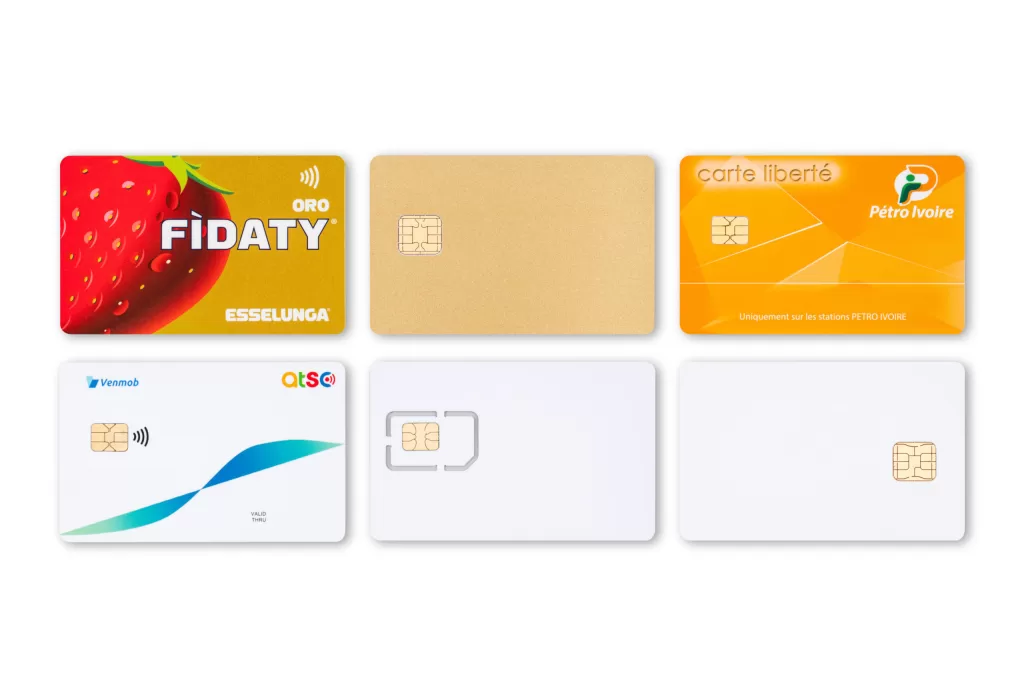
This is because different transportation projects have different requirements. Among the transportation Java Card solutions we offer, we provide the appropriate chip platform based on specific needs. Not all transportation Java Card solutions need to address the same issues. Some public transportation projects focus on single-trip commuting, while others require a card capable of handling transportation, authentication, or prepaid functions. Certain deployments require compact, proven secure elements like the THD89 chip card, while others benefit from platforms more focused on identity verification, such as the Infineon SLE 77CLF2400P EMV chip card or dual-interface options like the CIU9872B.
Faster Java Card enhances reader efficiency and optimizes the boarding process
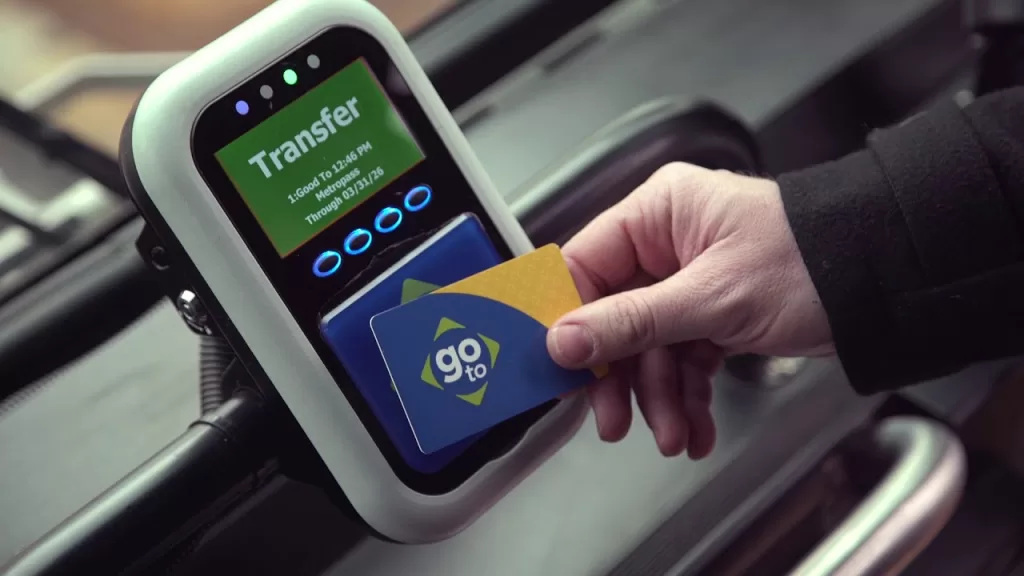
In our transportation Java Card solution, we utilize faster Java Card platforms. When cards respond quickly, passengers need only swipe their cards briefly for the validator to instantly confirm the fare, allowing doors to open more rapidly.
At the same time, we emphasize seamless integration with existing IT infrastructure, future-proof upgrades via standardized APIs and OTA updates, as well as proven reliability in applications such as banking, telecom SIM/USIM cards, government identity verification, and IoT/mobile smart card deployments. So, our solution stands out because it brings the same secure card technology used in other high-demand industries into public transit environments. A transportation Java Card solution built in this way is less likely to fail under high loads and offers greater stability as passenger volumes fluctuate.
How does the transportation Java Card solution perform in bus transit?
Public transit systems must constantly evolve. Fare policies are constantly changing, new card programs are emerging, and security requirements are increasing. A superior transportation Java Card solution does not confine transit agencies to a single model. These Java Cards support future upgrades via standardized APIs and OTA updates, offering flexibility that is ideal for transit projects seeking to improve operational efficiency without replacing the entire infrastructure.
Transportation Java Card solutions built on a flexible, standards-compliant Java Card operating system are easier to repurpose or expand than hard-coded, proprietary cards. NXP’s JCOP ecosystem also supports secure identity, payment, and public transit applications, with certified security and transaction performance. It remains effective as future transit networks evolve in bus transportation.
Addressing Slow Card Swipe Speeds and Transaction Delays
DCCO’s transportation Java Card solution effectively addresses slow card swipe speeds and transaction delays by combining the right standards, platforms, and transit-oriented deployment strategies. We built our solution on a portfolio of Java Card 3.2 and 4.0 technologies, supporting both contact and contactless payments while complying with ISO/IEC 7816, ISO/IEC 14443, and other key standards. This reduces wait times at ticket validators, supports secure bus transportation, and improves the overall travel experience for both passengers and drivers.