
 English
  Español


Selecting the right jcop emv card is a critical decision for secure payment projects because card security, system compatibility, production reliability, and long-term supply stability directly affect project success. For organizations developing EMV payment solutions, the procurement process should focus on more than chip specifications or initial cost. A suitable card solution must meet security requirements, support efficient deployment, and provide reliable performance throughout its lifecycle.
When purchasing a secure payment card, project teams need to evaluate multiple factors, including application requirements, security architecture, EMV compatibility, manufacturing capability, and technical support. A comprehensive procurement strategy helps reduce implementation risks and ensures that the selected card solution can support secure payment operations.
JCOP EMV Card Requirements for Secure Payment Applications
Before selecting a jcop emv card, buyers should define the payment application and required functions, as different projects have different requirements for memory, communication, and security capabilities.
Financial applications require secure transactions, EMV authentication, and cryptographic protection. They also need compatibility with existing payment terminals. Contactless solutions, including NFC bank cards and transportation payment cards, require fast communication with NFC readers and reliable data protection. Projects combining payment with identity, loyalty, or enterprise services require greater application flexibility and management capability.
Selecting JCOP Model, Memory, and Interface Based on Application Needs
Within the financial application areas of jcop emv card, conventional banking programs such as debit cards, credit cards, and prepaid cards represent one of the most common use cases. In these projects, the priority is secure payment execution rather than extensive application storage. A model such as J3D081 with approximately 80KB user memory can provide sufficient space for EMV payment applications, cryptographic keys, and transaction-related security data. This type of configuration is commonly selected when the card is mainly used for payment authentication and does not need to host multiple additional services.
As payment systems adopt contactless services, memory needs are increasing. Cards now support more functions beyond basic payments. J3R110 and J3R150 offer around 110KB and 150KB of user memory. They support contactless payments, NFC transactions, transport, and loyalty applications. In these scenarios, a dual-interface configuration is often preferred to maintain compatibility with both contact and contactless payment environments.
When payment is only one part of a broader smart card ecosystem, a higher-capacity solution is usually required. J3R180 provides approximately 180KB user memory for advanced smart card applications. It supports payment, identity verification, access control, and enterprise services. The larger memory allows multiple Java Card applets and future application expansion.

Key Factors to Consider During Procurement
Security is the foundation of every secure payment project, but procurement decisions should focus on practical security requirements rather than only technical descriptions. A reliable jcop emv card should protect sensitive payment information, support secure authentication, and maintain transaction integrity during daily operations.
When evaluating security performance, buyers should examine how the card manages sensitive data, protects applications, and supports secure payment processes. These factors determine whether the card can provide dependable protection in real payment environments.
Assess jcop emv card Security Architecture and Data Protection.
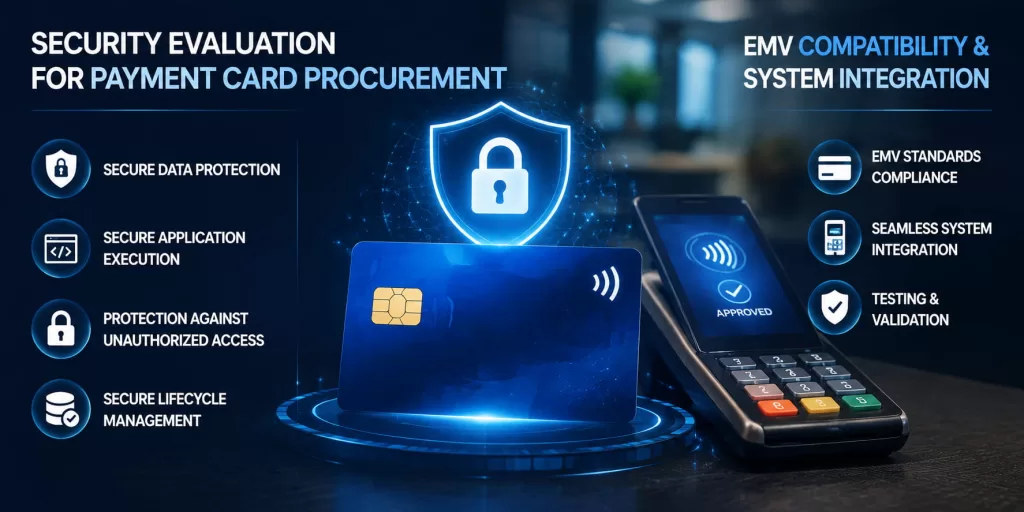
A secure payment card must provide strong protection for confidential information. During procurement, organizations should evaluate whether the secure payment card supports secure data storage, cryptographic operations, and controlled application execution.
Important security considerations include:
- Protection of cryptographic keys and payment credentials
- Secure execution environments for payment applications
- Protection against unauthorized access
- Reliable management of sensitive information during the card lifecycle
These capabilities allow payment applications to perform critical security functions within a protected environment, reducing exposure risks and improving transaction reliability.
For payment projects, security should also be considered throughout the entire lifecycle, including card initialization, personalization, deployment, and future application updates. A complete security approach helps maintain consistent protection after large-scale deployment.
Verify JCOP EMV Card Compatibility and System Integration
Compatibility requirements depend on the final payment environment. For banking applications such as debit cards, credit cards, and prepaid cards, buyers should confirm that the jcop emv card supports required EMV payment applications and integrates with existing POS terminals, personalization systems, and transaction platforms.
For contactless payment solutions, including NFC bank cards and transportation payment cards, compatibility with ISO/IEC 14443 communication standards and contactless terminals should be verified to ensure reliable transaction performance.
When payment functions are combined with identity, loyalty, or enterprise applications, buyers should also evaluate Java Card and GlobalPlatform compatibility to support secure application management and future updates.
Supplier Selection and Manufacturing Capability
When selecting a jcop emv card supplier, buyers should evaluate manufacturing capability, quality control, supply stability, and technical support to ensure reliable project delivery.
Before procurement, buyers should review the supplier’s production process, inspection standards, and delivery capability. For large-scale secure payment projects, consistent card quality across different batches and stable long-term supply are essential to avoid delays during deployment or future replenishment.
A reliable supplier should have effective testing procedures to verify card performance, communication reliability, and product consistency before shipment. In addition, suppliers should be able to support project-specific requirements, including memory selection, application compatibility, personalization processes, and technical verification. Strong engineering support allows buyers to select suitable jcop emv card specifications, solve integration challenges, and improve the efficiency of payment system implementation.

JCOP EMV Card for Secure Payment Projects
Selecting the right jcop emv card is a critical step in developing secure and reliable payment systems. A suitable card solution should not only meet current transaction requirements but also provide the security, compatibility, and flexibility needed for long-term project operation.
By evaluating application requirements, card specifications, security features, and supplier capabilities, organizations can choose an EMV payment card that supports stable transactions and efficient deployment. A well-selected jcop emv card provides a trusted foundation for secure payment projects and helps ensure consistent performance throughout the card lifecycle.