
 English
  Español

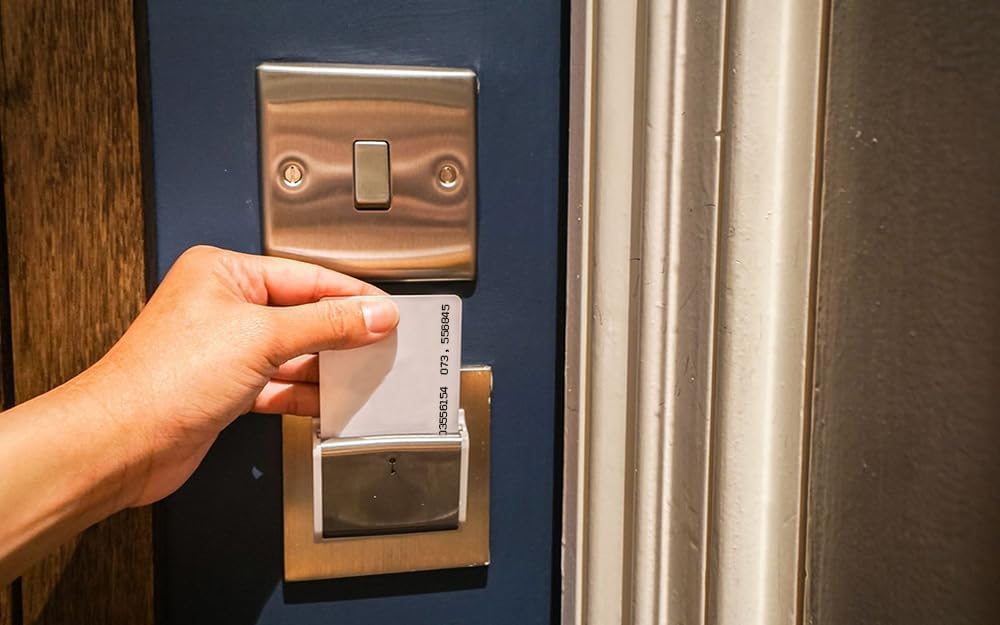
125kHz RFID cards are currently the most widely used type of low-frequency identification card, finding extensive application in access control, identity verification systems, and asset management. 125kHz RFID cards operate through inductive coupling between the reader’s antenna and the antenna coil embedded within the card. As the cards are passive devices, they require no internal power source; instead, they draw energy directly from the electromagnetic field transmitted by the reader.
Compared to High-Frequency (HF) and Ultra-High-Frequency (UHF) RFID technologies, 125kHz RFID cards offer distinct advantages, including robust environmental stability, relatively low cost, and a simple system architecture. Consequently, they remain highly prevalent in sectors such as employee identification, parking management, time and attendance systems, and membership card programs. Furthermore, the 125kHz operating frequency enables these cards to function reliably in environments—such as those involving electromagnetic interference, moisture, or metal structures—that might otherwise compromise the performance of higher-frequency RFID systems. This practical reliability is one of the primary reasons why organizations continue to deploy 125kHz RFID card technology, even in the wake of more advanced RFID solutions.
Compatible Chip Options for 125kHz RFID Cards
The EM4100 chip is one of the most widely utilized integrated circuits within the 125kHz RFID card. It is a read-only chip designed to store a unique identification number that is permanently programmed into the device during the manufacturing process.
Key features include: stable and reliable identification performance, extremely low production costs, and broad compatibility with the majority of standard 125kHz RFID readers.
Since the EM4100 chip transmits a fixed ID number, 125kHz cards utilizing this chip are both simple to deploy and easy to maintain. Another advantage of 125kHz RFID cards based on the EM4100 chip lies in their operational simplicity. Because the chip contains a permanently encoded identification number, issuers do not need to perform additional programming or configuration during the card issuance process. This streamlines the card management workflow, particularly for organizations that need to distribute cards in large volumes. Moreover, the mature ecosystem surrounding the EM4100 chip ensures that most access control software platforms already support the identification code formats generated by these chips.
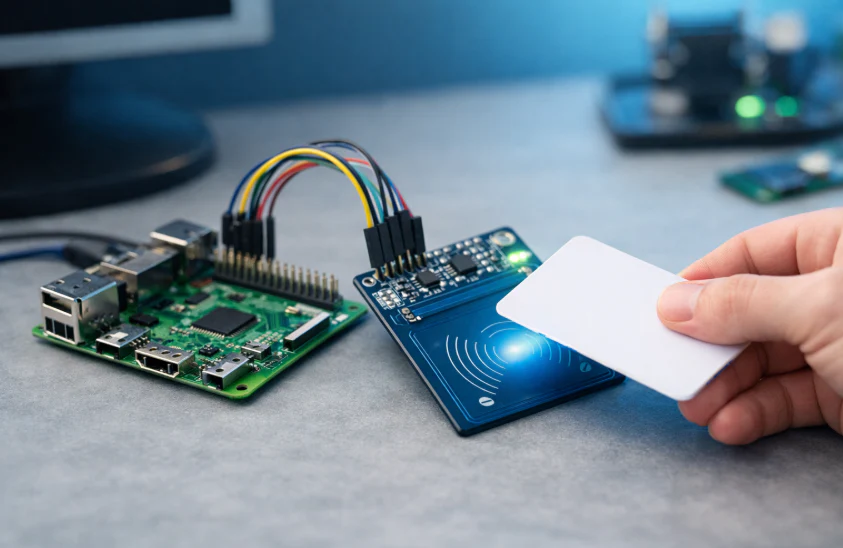
Typical Applications of EM4100-Based 125kHz RFID Cards
Many organizations rely on EM4100-based 125kHz RFID cards for applications requiring only basic identification—such as employee access badges, library cards, and membership cards.
However, because the EM4100 chip is read-only and lacks encryption capabilities, it is best suited for environments with relatively low security risks. Despite these limitations, EM4100-based 125kHz RFID cards remain dominant in large-scale deployments due to their cost-effectiveness and ease of use. For instance, schools frequently issue EM4100 125kHz RFID cards to students for applications such as access control and attendance management. Since these cards transmit a unique identification code, organizations can easily store it in a central database and manage a large user base without relying on complex credential management processes. This combination of simplicity and reliability explains why the EM4100 chip remains a foundational component in many RFID solutions.
The TK4100 Chip: A Compatible Option for 125kHz RFID Cards
The TK4100 chip represents another highly popular solution for the production of 125kHz RFID cards. Much like the EM4100, it is typically a read-only chip containing a unique identification code.
Within 125kHz card, the TK4100 chip offers several distinct advantages:
- Broad compatibility with various readers
- Reliable data transmission
- Support for common encoding methods
- Low manufacturing costs make it ideal for high-volume card production
These characteristics make the TK4100 an excellent choice for large-scale identification systems.
Furthermore, many manufacturers favor the TK4100 chip for its stable signal transmission and consistent reading performance. In the practical manufacturing of 125kHz RFID cards, manufacturers widely adopt the TK4100 because it supports multiple encoding formats and ensures compatibility with a wide variety of card readers currently available on the market. This flexibility is particularly crucial for system integrators who need to deploy RFID cards across different types of access control devices. By selecting the TK4100 chip, organizations can minimize compatibility issues while maintaining a reliable identification system capable of operating efficiently across multiple reader platforms.
Advantages of the TK4100 in Access Control Systems
Due to the TK4100 chip’s flexible encoding capabilities and stable performance, it is supported by many modern access control systems. Consequently, 125kHz RFID cards utilizing the TK4100 chip are widely deployed in corporate access control systems, residential complexes, and commercial buildings.
Beyond its compatibility, TK4100-based 125kHz cards maintain operational stability over extended periods of use. The chip’s internal architecture ensures that identification data remains accurate and error-free, even after thousands of read cycles. This level of reliability is particularly critical in high-traffic access control environments—such as office buildings and industrial facilities—where employees may use their 125kHz RFID cards multiple times a day.
HID-Compatible Chips
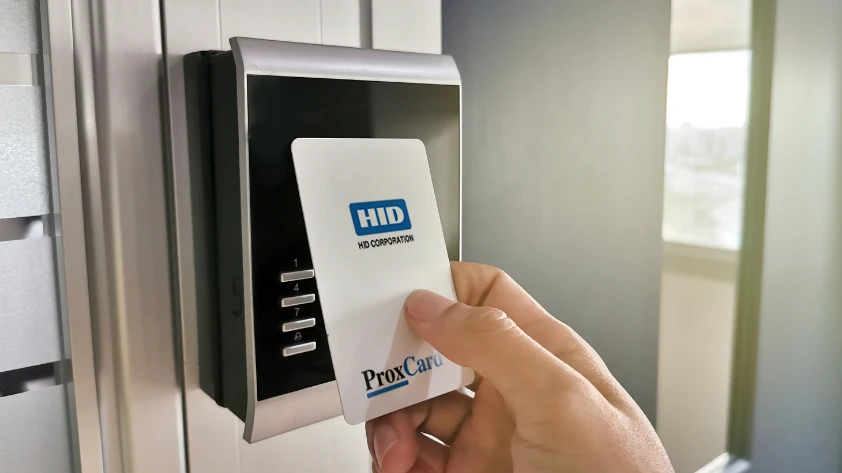
HID proximity technology is widely utilized in enterprise-grade access control systems. 125kHz RFID cards designed with HID-compatible chips can integrate seamlessly with the HID proximity readers installed in numerous corporate buildings and security infrastructures. These chips support proprietary data formats, enabling organizations to maintain compatibility with their existing infrastructure.
Thanks to its stable, reliable performance and strong brand reputation, HID proximity technology has become an established standard across many commercial security systems. Many office buildings, universities, and government agencies rely on HID-compatible 125kHz cards to manage access privileges for secure areas. By utilizing chips that adhere to HID proximity protocols, institutions can ensure that their 125kHz RFID cards function correctly with the readers already deployed throughout their premises.
Given the widespread adoption of HID systems in commercial security environments, HID-compatible 125kHz cards remain a practical solution for many organizations. In addition to compatibility, HID-based 125kHz RFID cards typically offer a more structured identification format, allowing for seamless integration with specialized access control software. Maintaining this level of system consistency is crucial for institutions managing large facilities with multiple entry and exit points. Therefore, selecting HID-compatible chips represents a strategic decision that ensures both operational stability and long-term compatibility with existing security infrastructure.
Key Factors in Choosing Compatible Chips
Selecting the appropriate chip for 125kHz RFID cards requires evaluating several critical technical and operational factors. These factors include reader compatibility, system security requirements, and the expected lifespan of the cards.
Key factors to consider include:
- Compatibility with existing RFID readers
- The required security level for the identification system
- Projected production volume and cost constraints
- Environmental factors affecting card performance
In addition to the technical considerations mentioned above, enterprises should also evaluate the long-term scalability of the system when selecting chips for 125kHz RFID cards. As a business grows, it may become necessary to issue additional cards or integrate new readers into the existing system. Choosing chips that support widely recognized standards can simplify future expansion and prevent compatibility issues. By planning and selecting reliable chip technology, system designers can ensure that 125kHz cards remain functional and adaptable, even as business requirements evolve.
Building Reliable 125kHz Cards with the Right Chips
Selecting the appropriate chip for 125kHz RFID cards is a critical step in building a reliable and efficient identification system. Chip options—such as the EM4100, TK4100, and HID-compatible chips—each offer distinct advantages depending on the specific application requirements. Whether the objective is simple identification, large-scale deployment, or compatibility with existing access control systems, choosing the right chip ensures that every 125kHz RFID card operates stably and securely. At the same time, the successful implementation of RFID technology depends on more than just hardware. Enterprises must also consider system integration, reader compatibility, card issuance management, and long-term scalability. By carefully evaluating these factors, organizations can deploy 125kHz cards that deliver stable performance, efficient identification, and low operational costs.