
 English
  Español

HID Proximity Card vs HID iCLASS Which Should You Choose
Many organisations face a common decision: HID Proximity Card or HID iCLASS? Both products come from HID Global, a leader in access control. Proximity cards have been used for decades. iCLASS cards represent an evolution with stronger security and more features. The choice depends on your security needs, system environment, and long-term strategy. I will explain the main differences between the two and guide you in making the right choice based on your specific application.
How Proximity Cards Work
Proximity cards operate at low frequency, typically 125 kHz. They use simple RFID technology to transmit a unique identifier to a reader. The reader then authorises access based on that identifier. Proximity credentials are passive and require no battery. They work well in basic access-control environments with fewer security requirements. These cards offer convenience and ease of use. Many existing systems worldwide still rely on them, with some integrators reporting that around 75% of legacy systems use low-frequency proximity technologies such as HID Prox credentials.

HID Proximity vs Smart Card Encryption
Security is key when choosing an access credential. A HID Proximity Card transmits an identifier that many readers can detect. This simplicity makes it easier to deploy but also easier to clone or mimic using common tools. In contrast, iCLASS cards operate at 13.56 MHz and implement secure authentication protocols. iCLASS credentials support mutual authentication and encrypted data transfer between the card and reader, using diversified 64-bit keys. That means iCLASS cards can protect against simple replay attacks and decrease the risk of unauthorised duplication.
Memory and Functionality Differences
Functionality extends beyond mere identification. Proximity cards generally store only a fixed UID and have minimal memory. This limits their use to straightforward access control. iCLASS cards, on the other hand, offer read/write contactless technology with expandable memory. They can store multiple applications, including access credentials, time-and-attendance data, and cashless transactions, on the same card. iCLASS cards typically come in 2 k-bit, 16 k-bit, or 32 k-bit configurations, giving administrators flexibility for future expansion.
Interoperability and System Migration
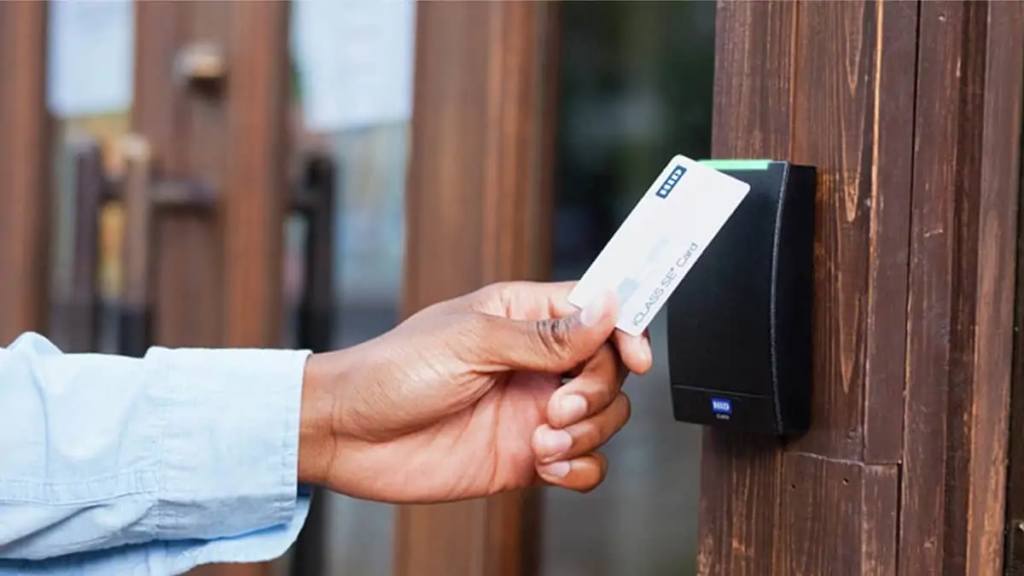
Another key consideration is how well the credential fits with your existing infrastructure. Proximity cards integrate easily with legacy systems built around 125 kHz readers. If you operate in a facility with many older doors and readers, sticking with a HID Proximity Card may be cost-effective. However, if your long-term plan involves modernising systems, iCLASS cards offer a smoother upgrade path. Many iCLASS products can also include a legacy proximity format within the same credential, supporting transition without replacing every reader immediately.
Real-World Security Needs and Examples
Industries such as healthcare, education, and government often require stricter access policies. In these environments, simple proximity identifiers no longer suffice. iCLASS cards meet higher regulatory and compliance demands. They are designed to support secure applications like biometric verification and network log-on. iCLASS technology combines robust access control with additional services, such as time and attendance or cashless vending, on the same card credential. For example, a large university might deploy iCLASS cards to manage dorm access, library services, and payment accounts, all on a single credential.
Cost Considerations and Operational Impact
Cost remains a practical concern. HID Proximity Cards generally cost less upfront due to their simple design and minimal memory requirements. They work well for tight budgets or facilities with low security needs. iCLASS cards cost more but deliver broader capabilities and stronger security. Operational costs also differ. Proximity systems may incur higher long-term expenses due to security breaches or future upgrades forced by outdated technology. Conversely, iCLASS systems often yield savings over time by supporting multiple applications from a single hardware investment.
Making the Right Choice for Your Facility
Both HID Proximity Card and HID iCLASS technologies play a role in modern access control. A HID Proximity Card remains suitable for simple, low-risk environments where cost and ease of use matter most. In contrast, HID iCLASS cards offer stronger security, higher memory capacity, and support for multi-application programs. The ideal choice depends on your specific security requirements, infrastructure compatibility, and long-term goals. Facilities that plan to expand or integrate additional services typically benefit from iCLASS’s advanced capabilities. Those with existing legacy systems may prioritise cost and ease of deployment with proximity cards. By carefully weighing these factors, you can choose the access credential that best supports your organisation’s needs today and into the future.