
 English
  Español


The right access control card determines how the entire physical security system operates in an application. The NXP MIFARE Plus S 2K/4K card combines traditional compatibility with modern encryption: it supports 13.56 MHz ISO/IEC 14443-A contactless communication, offers 2 KB and 4 KB EEPROM capacities, and enables AES-128-based encryption protection after migrating from classic mode. The NXP MIFARE Plus S 2K/4K is an ideal access card solution because it bridges this gap, providing backward compatibility with existing infrastructure while offering AES-based security, ensuring the highest level of protection for access control system deployments.
Why Choose Access Card for System Security?
Access control cards are more than just identification; they are the cornerstone of trust in the entire access control ecosystem. Readers, controllers, and software platforms all rely on access cards to provide genuine and valid credentials for access. Even with advanced backend technology, a system will be vulnerable if the access card itself has security vulnerabilities. Traditional access cards that rely on outdated encryption or static identifiers are increasingly susceptible to cloning, replay, and credential-emulation attacks. As the price and ease of obtaining attack tools decrease, businesses must realize that unencrypted or insufficiently encrypted access cards will ultimately be compromised. Therefore, choosing access cards with modern encryption is not simply an upgrade, but a necessary step to maintain long-term security.
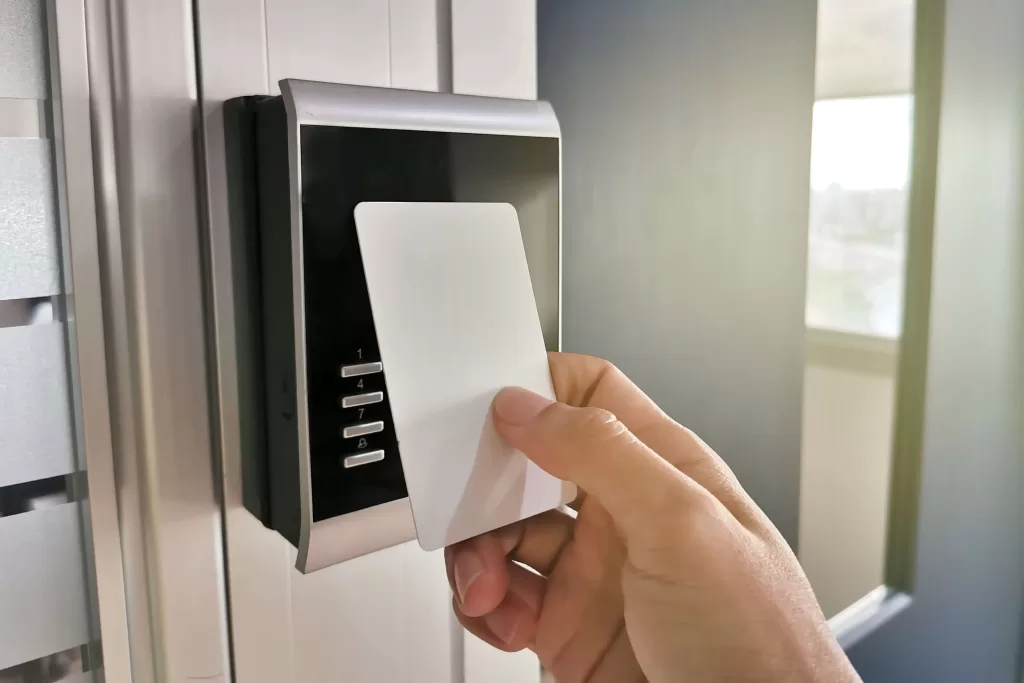
NXP MIFARE Plus S 2K/4K Card Technical Specifications
The NXP MIFARE Plus S 2K/4K card is a contactless smart card operating at 13.56 MHz, fully compliant with the ISO/IEC 14443 Type A standard. This ensures broad interoperability with industry-standard card readers and controllers.
The card offers two memory configurations:
- 2 KB EEPROM, suitable for standard access credentials and basic multi-application scenarios
- 4 KB EEPROM, designed for large deployments requiring additional data storage or multiple logical applications
It supports full read and write capabilities, enabling dynamic credential management, access permission updates, and lifecycle control. More importantly, its memory structure is compatible with MIFARE Classic addressing, simplifying system migration without requiring a complete redesign of the card layout.

Security Architecture of MIFARE Plus S for Access Control Card
Security is a core feature of MIFARE Plus S. Unlike traditional Classic cards, it introduces AES-128 encryption, an industry-recognized standard for security authentication and data protection. MIFARE Plus S supports multiple security levels (SL1-SL3). SL1 allows traditional card readers to operate with Classic cards, while SL3 enables full AES two-way authentication and secure messaging. This hierarchical model allows organizations to deploy cards immediately and progressively increase security as infrastructure upgrades are made. When properly configured, AES authentication prevents card cloning, protects data integrity, and defends against eavesdropping and replay attacks. These protections make NXP MIFARE Plus S 2K/4K cards suitable for access control systems with extremely high long-term credential security requirements.
Deploying Access Cards in a Real-World Access Control System
A significant advantage of MIFARE Plus S-based access control cards is their smooth migration path. Enterprises rarely replace all readers and access cards simultaneously. MIFARE Plus S supports phased migration, operating in a classic-compatible mode during the transition. The best practice migration strategy is to first issue Plus S cards that can be used with existing readers. Next, upgrade readers region by region to support AES authentication. Finally, once all critical infrastructure is ready, the system enforces a higher level of security. This approach minimizes operational disruption, avoids high upfront costs, and significantly reduces security risks over time without requiring a forced “complete replacement” upgrade.

Personalization and Key Management Best Practices
Encryption strength depends on how keys are managed. For NXP MIFARE Plus S 2K/4K cards, security personalization is paramount. AES key generation, storage, and injection should be performed in a controlled environment, such as a Hardware Security Module (HSM). Key diversification, regular rotation, and strict access control can mitigate the impact of any single security vulnerability. Once AES-enabled operation is available, the reader should be configured to reject insecure alternative modes. Equally important is operational standardization. Logging, auditing, and employee training ensure consistent implementation of encryption security measures throughout the card lifecycle, from issuance to cancellation.
Enables Long-Term Security Access Control Systems
Access control cards directly impact the security, scalability, and reliability of access control systems. NXP MIFARE Plus S 2K/4K cards offer a balanced solution by combining ISO/IEC 14443 compatibility, flexible memory options, AES-128 encryption, and an easily migrated architecture. With proper key management, security personalization settings, and phased reader upgrades, it effectively addresses vulnerabilities of traditional access control cards while avoiding unnecessary system downtime. For organizations seeking a future-proof access control system that delivers robust security without compromising operational continuity, the MIFARE Plus S is an undeniable, practical, and reliable choice.